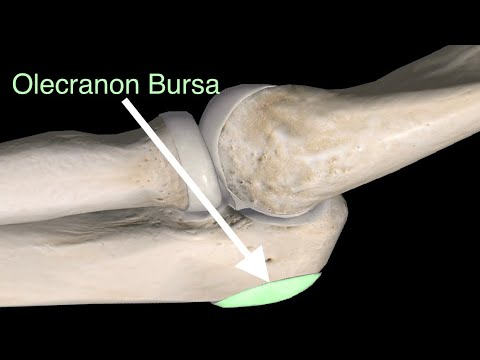
Olecranon Bursitis
Olecranon bursitis refers to inflammation and swelling of the bursa over the elbow. The olecranon is the bony lump at the elbow, which is part of the ulna bone.

Olecranon Bursitis
A bursa is a sac created by synovial membrane filled with a small amount of synovial (joint) fluid. They are found at bony prominences around the body (e.g., at the shoulder, elbow, hip , and knee). They act to reduce the friction between the bones and soft tissues during movement.
Bursitis is inflammation of a bursa. This causes thickening of the synovial membrane and increased fluid production, causing swelling. This inflammation can be caused by a number of things:
- Friction from repetitive movements or leaning on the elbow
- Trauma
- Inflammatory conditions (e.g., rheumatoid arthritis, psoriasis, eczema, or gout)
- Infection – referred to as septic bursitis
Olecranon bursitis is sometimes called “student’s elbow”, as students may lean on their elbow for prolonged periods while studying, or “nursemaid’s elbow. Repetitive friction and mild trauma leads to bursitis. It can also occur with people with occupations that require leaning on the elbow, such as electricians, laborers, gardeners, plumbers or drivers.
Presentation
The typical presentation is a young/middle-aged man with an elbow that is:
- Swollen
- Warm
- Tender
- Fluctuant (fluid-filled)
It is important to identify where bursitis is caused by infection. Features of infection are:
- Hot to touch
- More tender
- Erythema (redness) spreading to the surrounding skin
- Fever
- Features of sepsis (e.g., tachycardia, hypotension and confusion)
An important differential diagnosis is septic arthritis (underlying infection of the elbow joint). Consider septic arthritis if there is:
- Swelling in the joint (rather than the bursa)
- Painful and reduced range of motion in the elbow
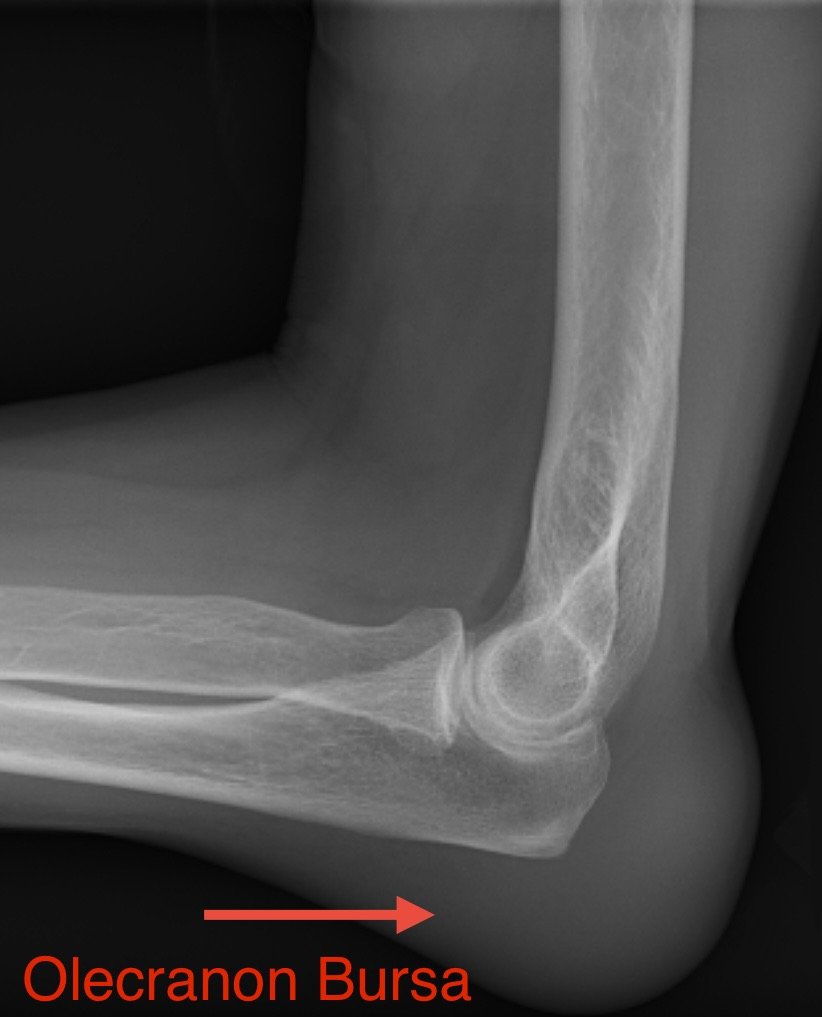
Olecranon Bursitis – Xray
Aspiration
Aspiration of fluid from the bursa is recommended when an infection is suspected. Taspirated fluid appearance can give an indication of the underlying cause:
- Pus indicates infection
- Straw-coloured fluid indicates infection is less likely
- Blood-stained fluid may indicate trauma, infection or inflammatory causes
- Milky fluid indicates gout or pseudogout
Aspiration should ideally be performed before starting antibiotics. The fluid is sent to the lab for microscopy and culture. During microscopy, they will examine for crystals (gout and pseudogout) and gram-staining for bacteria.
When infection is suspected or cannot be excluded, management involves:
- Aspiration of the fluid for microscopy and culture
- Treat with Antibiotics
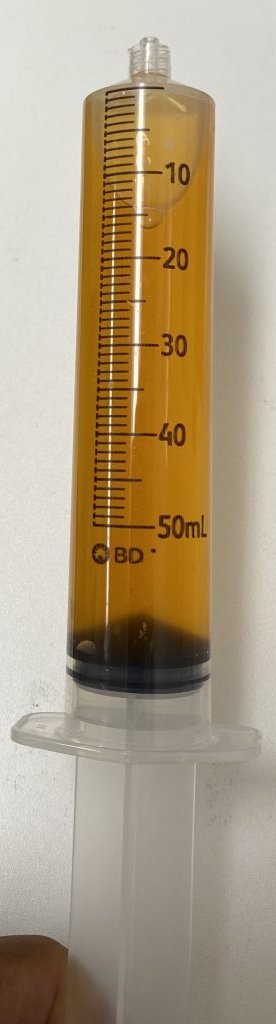
Straw Colored
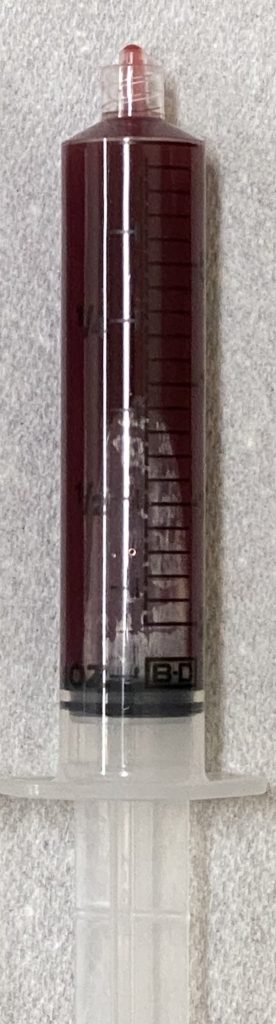
Frank Blood
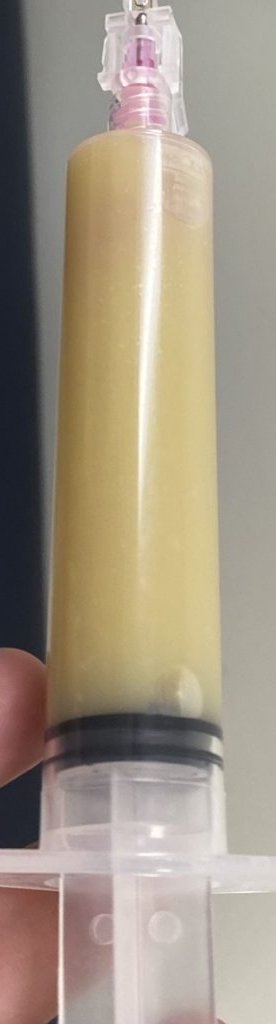
Pus
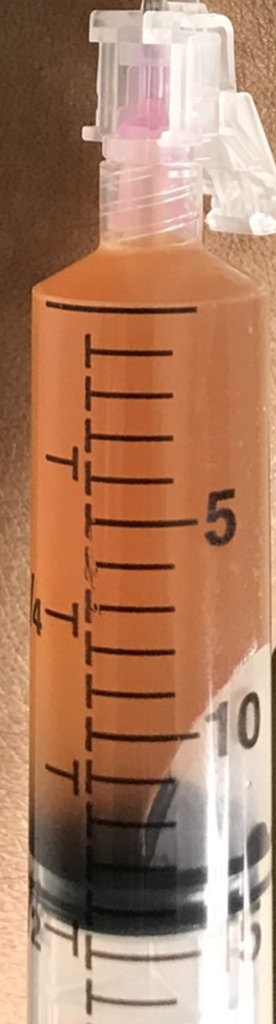
Blood Stained
Management
Management Options for Olecranon Bursitis
- Rest
- Ice
- Compression
- Analgesia (e.g., paracetamol or NSAIDs)
- Protecting the elbow from pressure or trauma
- Aspiration of fluid may be used to relieve pressure
- Steroid injections may be used in problematic cases where infection has been excluded
- Surgical Excision of the bursa