Understanding Elbow Osteoarthritis
Elbow osteoarthritis occurs when the cartilage surface of the elbow becomes worn down or damaged. This can happen after an injury such as an elbow fracture or dislocation, but it may also develop over time from age, activity, or repeated stress placed on the joint.
Although osteoarthritis more commonly affects weight-bearing joints such as the hip and knee, it can also affect the elbow. The elbow is typically less vulnerable because of its strong stabilizing ligaments and well-matched joint surfaces, but degeneration can still occur when the joint is injured or subjected to excessive wear.
This guide explains the causes, symptoms, diagnosis, and treatment options for elbow osteoarthritis.
What is Elbow Osteoarthritis?
Osteoarthritis of the elbow develops when the smooth cartilage that covers the joint surfaces begins to wear away. Cartilage allows the bones of the elbow to move smoothly against one another. As that surface becomes damaged, the joint can become painful, stiff, and less functional.
Because the elbow is not a weight-bearing joint, osteoarthritis here is less common than in the hip or knee. However, it can still develop after injury, repetitive stress, or years of wear on the joint.
Causes of Elbow Osteoarthritis
Some patients with elbow osteoarthritis have a history of injury to the elbow, such as a fracture involving the joint surface or a previous dislocation.
The risk of arthritis increases when:
- The patient needed surgery to repair the injury or reconstruct the joint
- There is loss of joint cartilage
- The joint surface cannot be repaired or restored to its pre-injury condition
Ligament injuries can also contribute to elbow osteoarthritis, even if the cartilage surface itself was not originally damaged. When the ligaments are injured, the normal forces across the elbow change, causing the joint to wear down more rapidly.
In some patients, no single injury is identified. Instead, repeated high demands on the joint over time can lead to degeneration. For example, professional baseball pitchers place significant repetitive stress on the elbow, which can lead to ligament failure, altered mechanics, and cartilage breakdown over the years.
The best way to reduce the risk of elbow arthritis is to avoid major injury when possible, seek prompt treatment if injury occurs, and maintain proper strength and conditioning around the joint.
Symptoms of Elbow Osteoarthritis
The most common symptoms of elbow arthritis are pain and loss of range of motion. These symptoms do not always appear at the same time, and they may worsen gradually over time.
- Pain: Pain may occur during movement or with activity and can become more persistent as arthritis progresses
- Loss of Range of Motion: Stiffness may make it harder to fully bend or straighten the elbow
- Grating Sensation: Patients often describe a grinding or grating feeling caused by cartilage damage and roughened joint surfaces
- Locking: Loose pieces of cartilage or bone may become trapped in the joint and block motion
- Swelling: Swelling usually develops later as the condition progresses
- Numbness or Tingling: In more advanced cases, swelling or stiffness may place pressure on the ulnar nerve, leading to numbness in the ring finger and small finger
If the elbow becomes stuck in a bent position over time, pressure around the nerve can increase further and contribute to these nerve-related symptoms.
How is Elbow Osteoarthritis Diagnosed?
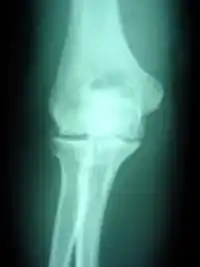
A doctor can usually diagnose elbow osteoarthritis based on your symptoms, physical examination, and standard x-rays. X-rays often show the degenerative changes within the joint and can help confirm the diagnosis.
Advanced imaging such as CT or MRI is typically not necessary to diagnose elbow osteoarthritis, although it may occasionally be used in more complex cases.
Elbow osteoarthritis without a prior injury tends to occur more often in men than women and is most common in patients age 50 and older, although symptoms can sometimes appear earlier.
Treatment Options
Treatment depends on the stage of the disease, the severity of symptoms, prior history, the patient’s goals, and imaging findings.
Nonsurgical Treatment
For early stages of elbow osteoarthritis, treatment is often nonsurgical. This may include:
- Oral medications to reduce pain and inflammation
- Physical therapy
- Activity modification
- Corticosteroid injections for temporary symptom relief
In some cases, viscosupplementation has been explored as an alternative to steroid injections. This involves injecting substances into the joint to improve joint fluid quality, though its role in the elbow remains limited and continues to be studied.
Surgical Treatment
When nonsurgical treatment is no longer enough to control symptoms, surgery may be considered. Even when arthritis is advanced, elbow arthroscopy may provide symptom relief and improved range of motion. Arthroscopy can be used to remove loose bone or cartilage fragments, remove inflamed tissue, smooth irregular surfaces, and remove bone spurs.
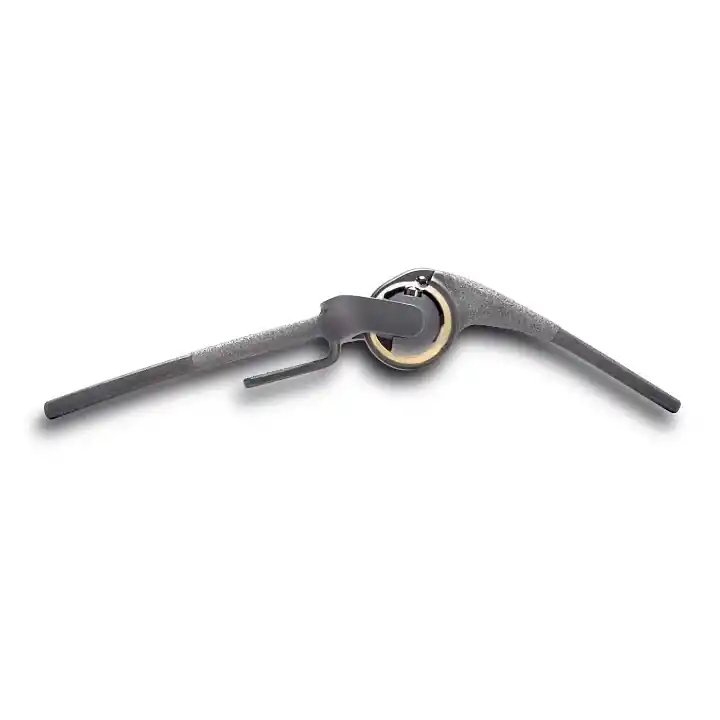
If the joint surface has worn away completely, elbow joint replacement may be the most effective option for relief. In properly selected patients, joint replacement can dramatically improve pain and function.
For younger or more active patients who may not be ideal candidates for replacement, other procedures may help improve motion and function, including surgical release of stiffness or tissue-based resurfacing options.
Research on the Horizon
In patients with isolated areas of cartilage or bone loss, grafting procedures may help restore smoother joint surfaces and potentially slow further deterioration. As research in cartilage growth and regeneration advances, larger areas of joint damage may become more treatable in the future.
Newer elbow replacement designs are also being developed with the goals of improved longevity and easier placement compared with earlier implants.
Frequently Asked Questions
What causes elbow osteoarthritis?
Elbow osteoarthritis can develop after injuries such as fractures or dislocations, from ligament instability, or from repeated wear and tear over time.
Is elbow arthritis common?
No. Elbow osteoarthritis is less common than arthritis in the hip or knee because the elbow is not a weight-bearing joint and has strong stabilizing ligaments.
Why does my elbow feel like it locks?
Locking can happen when loose pieces of cartilage or bone become trapped between the moving surfaces of the joint.
Can elbow arthritis cause tingling in my fingers?
Yes. In more advanced cases, swelling or stiffness around the elbow can place pressure on the ulnar nerve, leading to numbness or tingling in the ring finger and small finger.
Will I need surgery?
Not always. Many patients improve with medication, physical therapy, injections, and activity changes. Surgery is usually considered when symptoms persist and significantly affect function.
Can arthroscopy help elbow arthritis?
Yes. In some patients, arthroscopy can improve symptoms and motion by removing loose fragments, smoothing the joint, and removing bone spurs.