Understanding Golfer’s Elbow
Golfer’s Elbow
Golfer’s elbow, also known as medial epicondylitis, is a condition that causes pain on the inner side of the elbow. It develops when the tendons that attach the forearm muscles to the bony bump on the inside of the elbow become irritated or damaged. Despite its name, golfer’s elbow does not only affect golfers. It can occur in anyone who performs repetitive gripping, lifting, throwing, or wrist-flexing motions.
This condition is often related to overuse, especially when the same forearm and wrist movements are repeated over time. The pain may begin gradually and worsen with activity, making everyday tasks like lifting objects, shaking hands, or turning a doorknob uncomfortable.
Understanding golfer’s elbow can help patients recognize symptoms early and seek treatment before the condition becomes more persistent or limiting.
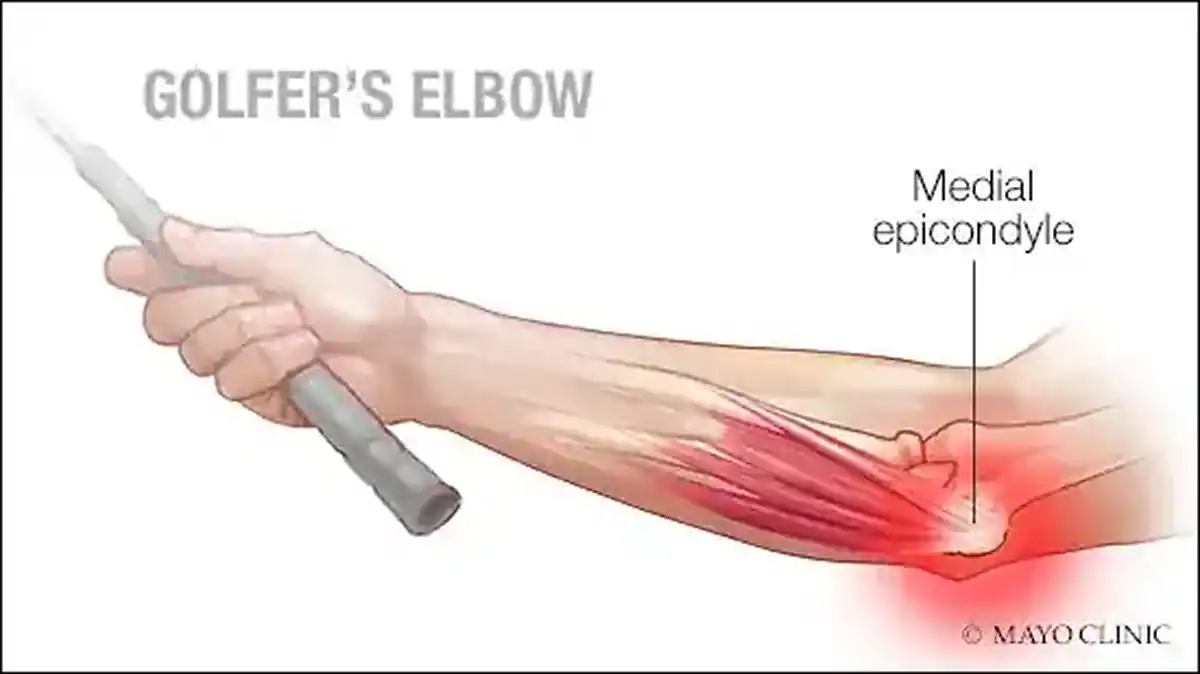
Pain on the Inner Side of the Elbow
How Golfer’s Elbow Develops
Golfer’s elbow develops when repeated stress causes small tears and degeneration in the tendons that attach to the medial epicondyle, the bony prominence on the inside of the elbow. These tendons help control wrist flexion and gripping movements, so activities that repeatedly load these muscles can lead to irritation over time.
Although the condition is commonly associated with golf, it is also seen in people who play racquet sports, lift weights, perform manual labor, or use tools that require repetitive hand and wrist motion. Poor technique, sudden increases in activity, and inadequate recovery can all contribute to the problem.
Symptoms may range from mild soreness to more persistent pain and weakness. Without treatment or activity modification, the condition can become chronic and interfere with sports, work, and daily tasks.
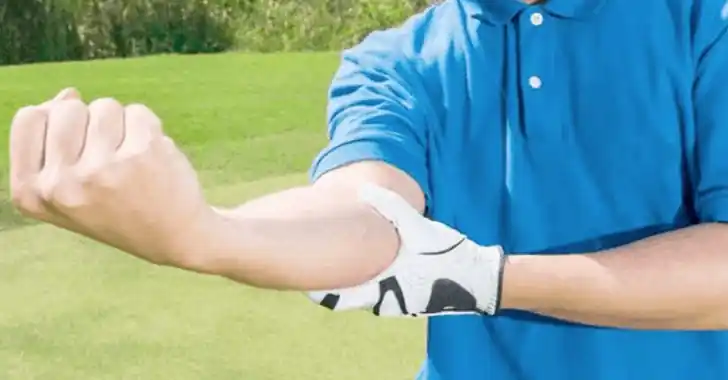
Frequently Asked Questions
What does golfer’s elbow feel like?
Golfer’s elbow usually causes aching or tenderness on the inside of the elbow. The pain may spread into the forearm and often gets worse with gripping, lifting, wrist flexion, or twisting motions. Some people also notice weakness in the hand or discomfort when shaking hands or carrying objects.
Do you have to play golf to get golfer’s elbow?
No. Golfer’s elbow can affect anyone who repeatedly uses the forearm muscles involved in gripping and wrist flexion. It is common in golfers, but it can also occur in baseball players, tennis players, weightlifters, mechanics, carpenters, and others who perform repetitive arm and hand movements.
How is golfer’s elbow different from tennis elbow?
Golfer’s elbow affects the tendons on the inside of the elbow, while tennis elbow affects the tendons on the outside of the elbow. Both are overuse injuries involving tendon irritation, but they involve different muscle groups and different areas of pain.
How is golfer’s elbow treated?
Treatment often includes rest, activity modification, anti-inflammatory measures, physical therapy, and exercises to improve flexibility and strength. Bracing or support straps may also help reduce tendon strain. In more persistent cases, additional treatments such as injections or other procedures may be recommended depending on the severity of symptoms.