Understanding Humerus Fractures at the Elbow
An Educational Guide to Distal Humerus Fractures
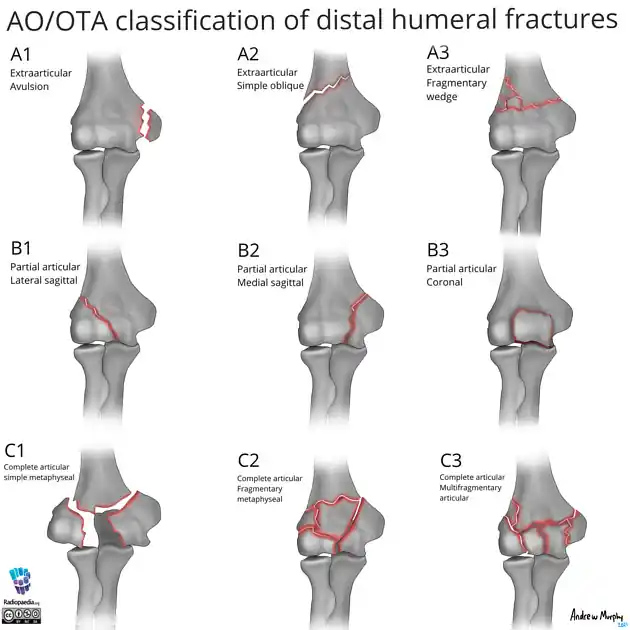
A distal humerus fracture is a break in the lower end of the upper arm bone (the humerus), which forms the upper part of the elbow joint. These fractures, often referred to as humerus fractures of the elbow, can be complex injuries because they involve a critical part of the joint's surface. The terms "fracture" and "broken bone" mean the same thing. This type of break can range from a simple crack to a severe injury where the bone shatters into multiple pieces. These fractures typically result from significant trauma, like a direct blow or a fall, and can have a major impact on arm function if not properly diagnosed and managed.
Detailed Information on Distal Humerus Fractures
All About Humerus Fractures of the Elbow
The elbow is a complex hinge-and-pivot joint where three bones meet: the humerus, radius, and ulna. A fracture of the distal humerus disrupts this intricate structure. Because this part of the bone has a complex shape and is covered with smooth cartilage for joint movement, fractures here can be challenging. They can affect your ability to bend, straighten, and rotate your arm. The severity depends on the pattern of the break and whether the bone fragments have moved out of place (displaced) or remain aligned (non-displaced).
Causes and Risk Factors
These fractures almost always occur as a result of significant force or trauma.
- Direct Blows: A direct impact to the elbow, such as in a motor vehicle accident or a hard hit during contact sports, is a common cause.
- Falls: Falling directly onto the bony tip of the elbow can drive the ulna into the end of the humerus, causing it to break. Falling on an outstretched hand can also transmit enough force up the arm to fracture the humerus at the elbow.
- High-Impact Injuries: These fractures are often associated with high-energy trauma.
- Weakened Bones: In individuals with weakened bones from conditions like osteoporosis, a distal humerus fracture can occur from a less severe fall.
Symptoms
The signs and symptoms of a distal humerus fracture are typically immediate and severe.
- Intense Pain: A sudden, sharp pain at the elbow is the most common symptom.
- Swelling and Bruising: The elbow will usually swell significantly and develop bruising quickly.
- Inability to Move the Arm: It is often impossible to bend or straighten the elbow due to pain and the mechanical disruption of the joint.
- Deformity: If the bone fragments are displaced, the elbow may look crooked or "out of place."
- A Snap or Crack: You might hear or feel a snapping sound at the moment of injury.
- Numbness or Weakness: A potential complication is injury to the nerves and blood vessels that run close to the bone. Numbness, tingling, or weakness in the hand or forearm are important warning signs.
Diagnosis
A thorough medical evaluation is required to confirm a distal humerus fracture and plan treatment.
- Physical Examination: A doctor will examine the injured arm, assessing for pain, swelling, and deformity. A crucial part of the exam is to check for nerve and blood vessel function by testing sensation, movement, and pulses in the hand and wrist.
- X-rays: X-rays are the standard imaging test to diagnose a fracture. They can show the location of the break, the pattern (e.g., transverse, comminuted), and whether the bone fragments are displaced.
- CT Scan (Computed Tomography): For complex fractures, especially those that are shattered or involve the joint surface, a CT scan is often used. It provides highly detailed, 3D images of the bone, which helps in understanding the fracture pattern and planning for potential surgery.
Frequently Asked Questions
Why is a humerus fracture at the elbow a serious injury?
This type of fracture is considered serious because it involves a major weight-bearing joint of the arm and often damages the smooth cartilage surface essential for movement. Improper healing can lead to permanent stiffness, loss of motion, and post-traumatic arthritis. Furthermore, the major nerves and blood vessels that supply the forearm and hand travel very close to this part of the humerus. These structures can be injured by the sharp bone fragments at the time of the break, potentially causing long-term numbness, weakness, or circulation problems.
What are the signs that a nerve or blood vessel might be injured?
If you experience numbness, a "pins and needles" sensation, or significant weakness in your hand or fingers after an elbow injury, it could indicate a nerve has been damaged. Signs of a blood vessel injury are even more urgent and include a cool or pale hand, a bluish or purple skin color, or a weak or absent pulse at the wrist. Both nerve and vascular injuries are medical emergencies and require immediate evaluation to prevent permanent damage to the arm.
Will my elbow be stiff after this type of fracture?
Stiffness is a very common issue following a distal humerus fracture. The elbow joint is naturally prone to becoming stiff after an injury or surgery. The healing process involves a period of immobilization, which can cause the joint capsule to tighten and muscles to weaken. Even with successful treatment, some loss of full extension or flexion is possible. A dedicated rehabilitation program, including physical or occupational therapy, is critical to regaining as much range of motion and strength as possible once the bone has started to heal.