Understanding Posterior Impingement
An Educational Guide to Posterior Elbow Impingement
Posterior elbow impingement, also known as Valgus Extension Overload (VEO), is a condition characterized by pain at the back of the elbow, especially when the arm is fully straightened. It is a common overuse injury seen in athletes who perform repetitive, high-velocity overhead motions, such as baseball pitchers. This condition develops from a "wear and tear" pattern where parts of the elbow bones repeatedly contact each other during the throwing motion. Over time, this contact can lead to cartilage damage and the formation of bone spurs, causing pain and functional limitations.
Detailed Information on Posterior Impingement
All About Posterior Elbow Impingement (VEO)
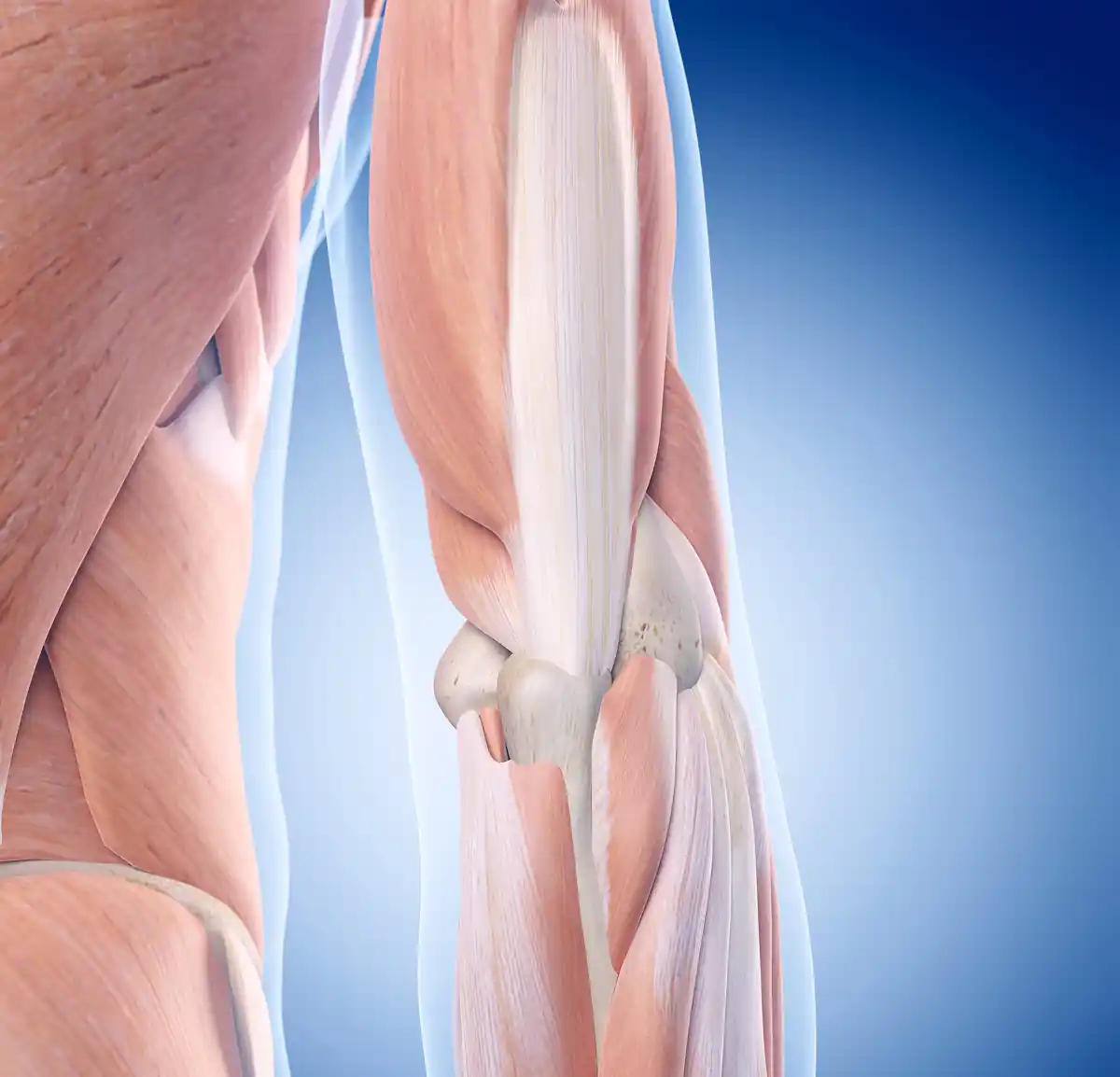
Posterior impingement, or VEO, is a specific pattern of injury that occurs in throwing athletes. During the rapid extension of the elbow in an overhead throw, the olecranon (the bony tip of the elbow) can forcefully contact and shear against the humerus (the upper arm bone). This repetitive impact occurs at the back and inner (posteromedial) side of the joint. Over time, this chronic stress can wear down the protective articular cartilage and stimulate the body to form bone spurs, also known as osteophytes. These changes can lead to pain, swelling, and sometimes mechanical symptoms if bone fragments break loose.
Causes and Risk Factors
The primary cause of posterior impingement is repetitive, high-force stress on the elbow joint.
- High-Velocity Throwing: The condition is most strongly associated with sports that involve repetitive overhead throwing, like baseball pitching, javelin throwing, and volleyball.
- Overuse: The injury is a classic overuse pattern. High pitch counts, throwing year-round without adequate rest, and throwing through fatigue significantly increase the risk.
- Skeletal Maturity: This pattern is typically seen in skeletally mature throwers, as the bone changes often develop over a prolonged period of athletic activity.
Symptoms
The symptoms of posterior impingement are directly related to the area of impact within the elbow.
- Posterior Elbow Pain: Athletes typically experience pain and tenderness at the back and inner side of the elbow.
- Pain with Extension: The pain is most pronounced when the arm is fully extended or nearing full extension, as this is when the bony contact occurs.
- Swelling: Swelling may be present at the back of the elbow, particularly after a throwing session.
- Mechanical Symptoms: If bone spurs break off and become loose bodies within the joint, athletes may experience catching, clicking, or locking of the elbow.
Diagnosis
Diagnosing posterior impingement involves a thorough clinical evaluation, paying close attention to the athlete's sport and symptoms, supported by imaging.
- Physical Examination: A clinician will perform a physical exam, which often reveals tenderness at the back of the elbow. A key diagnostic maneuver is the valgus extension overload test, where the clinician moves the elbow to reproduce the impingement and pain.
- X-rays: X-rays are very useful for diagnosing this condition. They can clearly show the presence of posteromedial osteophytes (bone spurs) and can also identify any loose bone fragments within the joint.
- MRI: An MRI may be used to get a more detailed view of the elbow. It can show cartilage wear, bone stress reactions (bone marrow edema), and evaluate associated injuries to soft tissues like the ulnar collateral ligament (UCL), which can occur with VEO.
Frequently Asked Questions
Is posterior impingement the same as a UCL injury?
No, but they are often related and can occur together in throwing athletes. A UCL injury involves tearing or stretching of the ulnar collateral ligament on the inner side of the elbow. Posterior impingement (VEO) is a bone and cartilage issue at the back of the elbow caused by repetitive impact. The valgus stress that injures the UCL also contributes to the compression and shear forces that cause VEO. An MRI is often helpful in distinguishing between the two and determining if both conditions are present.
What is a bone spur and why does it form?
A bone spur, or osteophyte, is an extra growth of bone that typically forms along the edges of a joint. In posterior impingement, bone spurs form on the olecranon as a response to the repetitive stress and impact from throwing. The body essentially tries to stabilize the stressed area by laying down more bone. While this is a natural response, the bone spurs themselves can become part of the problem, worsening the impingement and sometimes breaking off to become loose bodies in the joint.
Can this condition cause the elbow to lock up?
Yes, posterior impingement can cause the elbow to lock. This mechanical symptom is a significant warning sign. Locking typically occurs if a bone spur breaks off or a piece of cartilage becomes detached, creating a "loose body" that floats within the joint. This loose fragment can get caught between the moving surfaces of the elbow, physically blocking motion and causing the joint to lock or catch painfully. The presence of locking usually indicates a more advanced problem that requires careful evaluation.