Understanding Posteromedial Rotatory Instability
Posteromedial Rotatory Instability
Posteromedial rotatory instability is a specific type of elbow instability that occurs when the stabilizing structures on the inner and outer sides of the elbow are injured, allowing the joint to shift abnormally during movement. This condition most often involves injury to the lateral collateral ligament complex along with a fracture or damage to the anteromedial facet of the coronoid, an important bony stabilizer of the elbow.
Because the elbow relies on a careful balance of ligaments, bone structure, and joint alignment, injuries that disrupt this balance can lead to pain, instability, and progressive joint damage. Posteromedial rotatory instability may occur after a fall, traumatic twisting injury, or elbow dislocation, and it can be difficult to recognize without a thorough evaluation.
Early diagnosis is important because untreated instability can cause continued joint wear, cartilage damage, and long-term loss of elbow function. Identifying the injury pattern helps guide treatment aimed at restoring stability and protecting the joint.
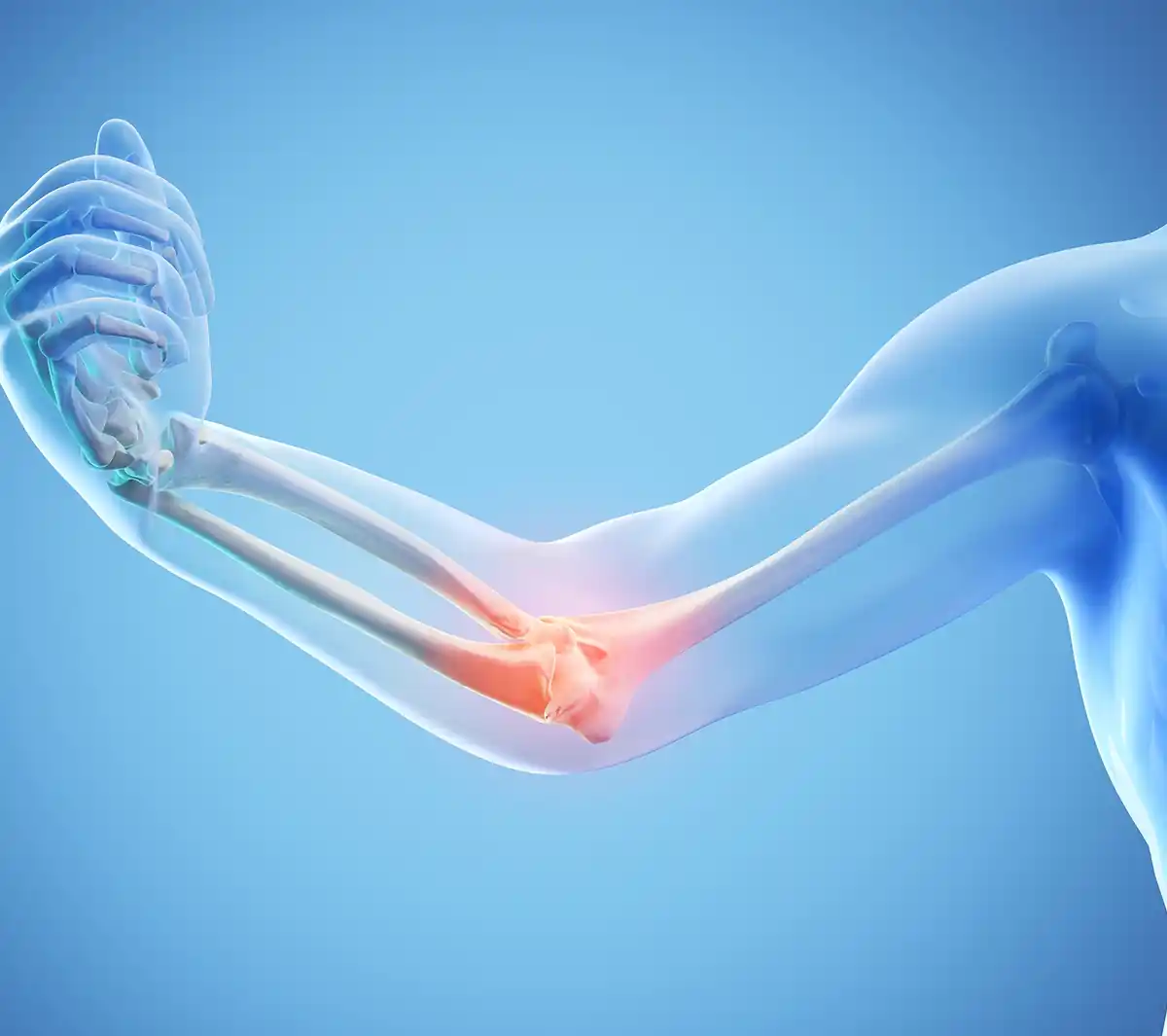
A Complex Form of Elbow Instability
How Posteromedial Rotatory Instability Develops
Posteromedial rotatory instability develops when the elbow is subjected to a force that causes the ulna to rotate and shift abnormally against the humerus. This often happens when the lateral collateral ligament complex is torn and the bony support of the coronoid is also injured. Without these stabilizing structures, the elbow may partially sublux or move in an abnormal pattern during motion.
This injury can result from a fall onto an outstretched hand, a sports injury, or other traumatic events that force the elbow into a twisting position. In some cases, the instability may not be obvious at first, especially if the joint appears reduced after the injury. However, continued abnormal motion can lead to pain, catching, loss of function, and progressive arthritis over time.
Because this type of instability involves both soft tissue and bone injury, careful examination and imaging are often needed to confirm the diagnosis. Prompt treatment can help restore elbow stability and reduce the risk of long-term complications.
Frequently Asked Questions
What symptoms can occur with posteromedial rotatory instability?
Symptoms may include elbow pain, a feeling of looseness or shifting in the joint, swelling, limited range of motion, and difficulty using the arm for pushing or weight-bearing activities. Some patients also notice clicking, catching, or a sense that the elbow is not moving normally.
How is posteromedial rotatory instability diagnosed?
Diagnosis usually involves a detailed physical examination along with imaging studies. X-rays may show subtle fractures or joint alignment problems, while CT or MRI scans can help identify injury to the coronoid, cartilage, and ligament structures. Because this instability pattern can be missed initially, careful evaluation by an elbow specialist is often important.
Is posteromedial rotatory instability the same as a simple elbow sprain?
No. Although some symptoms may overlap, posteromedial rotatory instability is a more complex injury involving important stabilizing structures of the elbow. A simple sprain may improve with time and conservative care, while posteromedial rotatory instability may continue to cause abnormal joint motion and damage if the underlying injury pattern is not recognized and treated appropriately.
How is posteromedial rotatory instability treated?
Treatment depends on the severity of the ligament and bone injury as well as the degree of instability. In some cases, bracing and rehabilitation may be considered, but many patients with significant instability require surgical treatment to repair or reconstruct damaged ligaments and address associated fractures. The goal is to restore normal joint alignment, improve stability, and help preserve long-term elbow function.