Understanding Pronator Syndrome
An Educational Guide to Pronator Syndrome
Pronator syndrome is a nerve compression condition affecting the median nerve as it passes through the forearm. This condition can cause pain, aching, and sometimes sensory changes in the forearm and hand. It is often considered a “look-alike” diagnosis because its symptoms can closely mimic other, more common conditions like carpal tunnel syndrome.
For individuals whose work or sports involve repetitive gripping and forearm rotation, understanding pronator syndrome is important for achieving an accurate diagnosis and finding the right path toward relief.
All About Pronator Syndrome
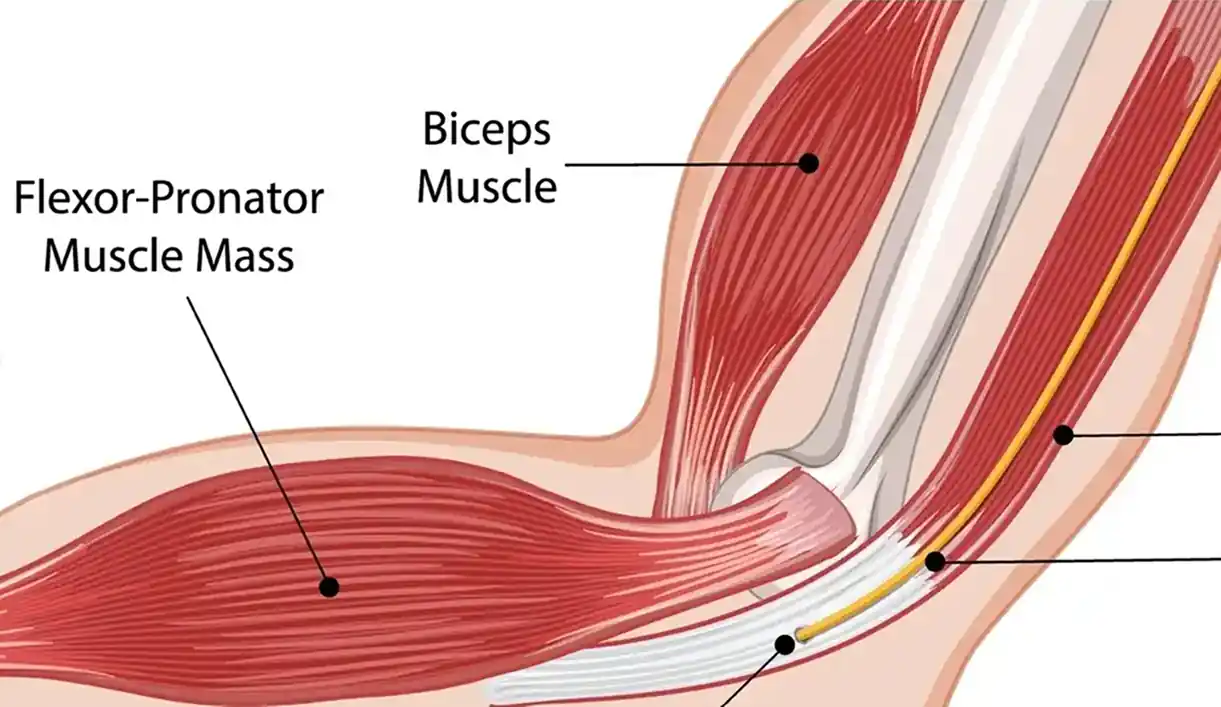
Pronator syndrome occurs when the median nerve is compressed or entrapped as it passes through a tunnel formed by muscles in the upper forearm, most notably the pronator teres muscle. This pressure irritates the nerve and can lead to pain, discomfort, and sensory symptoms.
Unlike carpal tunnel syndrome, which involves compression of the same nerve at the wrist, pronator syndrome typically causes pain centered in the forearm. It is considered a type of nerve entrapment neuropathy, meaning the nerve’s function is disrupted by external pressure. Although it is less common than other nerve compression conditions, it remains an important possible cause of forearm pain.
Causes and Risk Factors
Pronator syndrome is most often related to repetitive use, overuse, or structural factors that place pressure on the median nerve, including:
- Repetitive Forearm Rotation: Repeated, forceful turning of the palm downward (pronation) can irritate the surrounding muscles and compress the nerve.
- Forceful Gripping: Sports and work activities that involve sustained or repetitive gripping may increase pressure within the forearm.
- Muscle Enlargement: Athletes and laborers with significant forearm muscle development may have less space for the median nerve to pass through comfortably.
- Anatomical Variations: Certain muscle or fibrous band structures in the forearm may make some people more prone to nerve compression.
Symptoms
The symptoms of pronator syndrome are often somewhat vague and are usually centered more in the forearm than the hand.
- Aching Forearm Pain: The most common symptom is a deep, aching discomfort in the upper forearm near the elbow.
- Pain That Mimics Other Conditions: Pronator syndrome can resemble tendon-related problems or other nerve compression issues, making diagnosis more challenging.
- Sensory Changes: Some people may notice numbness or tingling in the thumb, index, and middle fingers, though these symptoms are usually less prominent than in carpal tunnel syndrome.
- Weakness or Clumsiness: A sense of hand fatigue, weakness, or reduced coordination may occur, although severe weakness is less common.
Diagnosis
Diagnosing pronator syndrome can be difficult because its symptoms overlap with several other conditions. The diagnosis often depends on careful clinical evaluation and ruling out other possibilities.
- Physical Examination: A clinician may perform specific tests that place stress on the median nerve, such as resisting forearm pronation or finger and wrist flexion, to see whether symptoms are reproduced.
- Nerve Conduction Studies (EMG/NCS): These tests evaluate how well the median nerve is functioning. However, results may be normal in pronator syndrome, so diagnosis often relies heavily on physical exam findings.
- Imaging: MRI or ultrasound may occasionally be used to rule out other sources of compression, such as a cyst, mass, or structural abnormality.
- Differential Diagnosis: A key part of diagnosis is distinguishing pronator syndrome from carpal tunnel syndrome, cervical radiculopathy, and other sources of elbow or forearm pain.
Frequently Asked Questions
How is pronator syndrome different from carpal tunnel syndrome?
Both pronator syndrome and carpal tunnel syndrome involve compression of the median nerve, but the location is different. Carpal tunnel syndrome occurs at the wrist, while pronator syndrome occurs higher up in the forearm. Because of this, carpal tunnel syndrome more often causes numbness and tingling in the fingers, especially at night, while pronator syndrome is more commonly associated with aching forearm pain and fewer sensory symptoms.
Can this condition be caused by sports?
Yes. Pronator syndrome can be related to sports that involve repetitive gripping, throwing, rowing, lifting, or racquet use. These activities may lead to inflammation or tightening of the forearm muscles, which can place pressure on the median nerve and trigger symptoms.
Why are diagnostic tests like EMG sometimes normal with pronator syndrome?
Pronator syndrome may be difficult to confirm with EMG or nerve conduction studies because the compression can be intermittent or related to movement. Standard testing is usually performed with the arm at rest, which may not reproduce the dynamic compression that happens during activity. For that reason, a normal EMG does not rule out pronator syndrome, and diagnosis often depends on a detailed history, physical examination, and the exclusion of other causes.