Understanding Trochlear OCD
An Educational Guide to Trochlear Osteochondritis Dissecans (OCD)
Osteochondritis dissecans, commonly known as OCD, is a joint condition affecting both cartilage and the bone just beneath it. While it often occurs in the knee and ankle, it can also develop in the elbow. Trochlear OCD specifically refers to a lesion on the trochlea, which is a groove-shaped part of the humerus (upper arm bone) that forms a key part of the elbow's hinge. This condition is a type of osteochondral injury, meaning it involves both bone ("osteo") and cartilage ("chondral"). It frequently develops due to repetitive stress, making it a concern for certain athletes. A clear understanding of this condition is essential for athletes, parents, and coaches to recognize symptoms and seek appropriate evaluation.
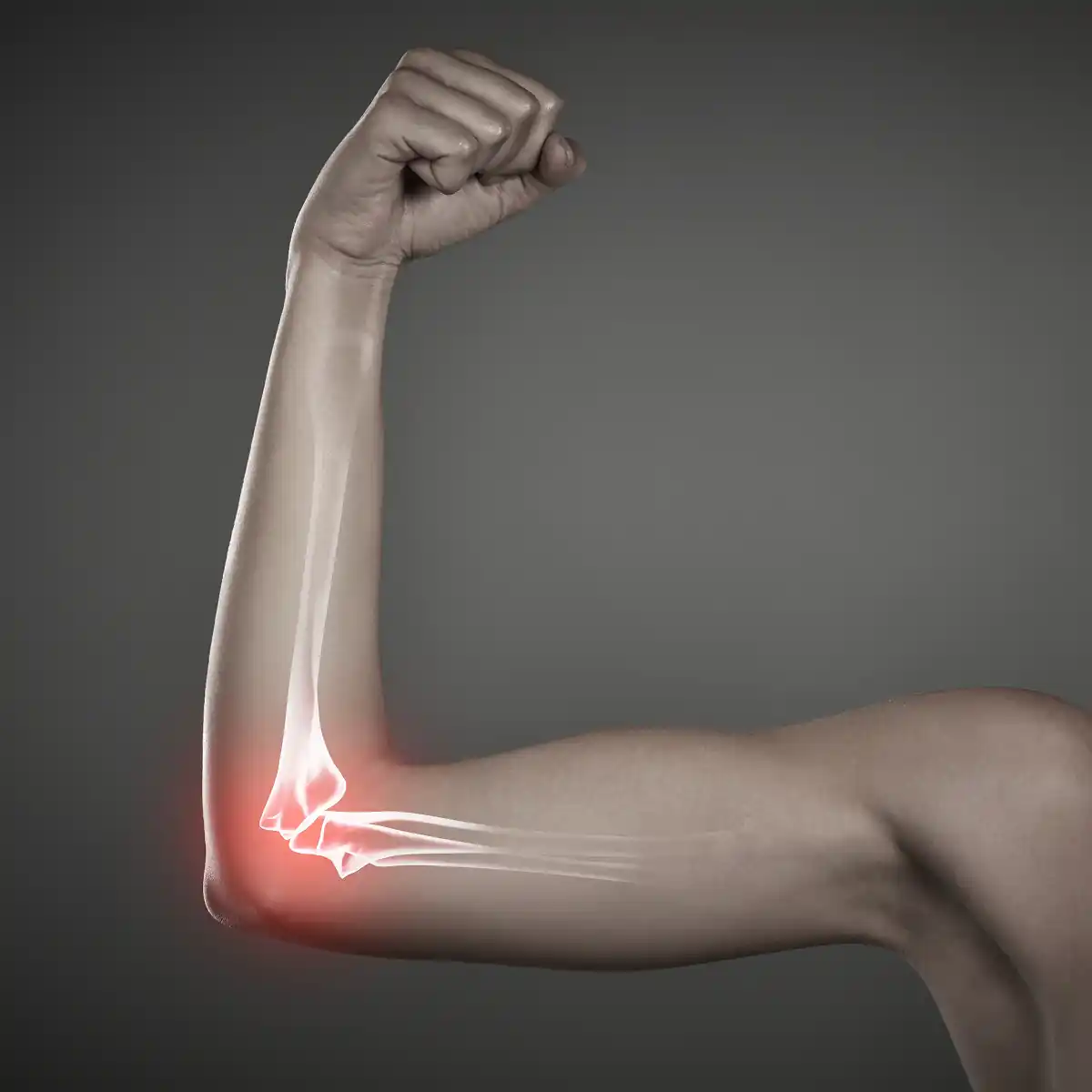
Detailed Information on Trochlear OCD
All About Trochlear OCD
Trochlear OCD is an injury to the cartilage and underlying bone of the trochlea, a critical surface for the elbow's hinge motion. The condition arises when a segment of bone and its overlying cartilage is damaged, often due to compromised blood supply from repetitive stress. This can cause the segment to soften, crack, or even break loose, forming what is known as a "loose body" within the joint. While less common than Capitellar OCD (which affects the outer part of the elbow), Trochlear OCD is an important diagnosis to consider in athletes presenting with elbow pain, especially those involved in sports that load the joint in unique ways.
Causes and Risk Factors
The exact cause of Trochlear OCD is often related to repetitive microtrauma that disrupts blood flow to a localized area of bone.
- Repetitive Stress: Sports that place repeated valgus (outward gapping) and compressive forces on the elbow, such as overhead throwing, can contribute to osteochondral injuries.
- Specific Sports Loading: Activities that repeatedly load the elbow, like gymnastics, are associated with a higher risk of developing OCD lesions. The high-impact and weight-bearing nature of gymnastics places significant compressive forces on the joint.
- Age and Development: OCD is most commonly diagnosed in adolescents and young adults. The growing bones and cartilage in younger athletes can be more susceptible to injury from repetitive high loads before they reach full skeletal maturity.
Symptoms
The symptoms of Trochlear OCD can be subtle at first and may progress over time.
- Elbow Pain: Vague, activity-related pain is a common early symptom. The pain may be localized to the inner or back part of the elbow.
- Swelling: Joint effusion, or swelling within the elbow, may be present.
- Loss of Motion: Athletes might notice a gradual loss of the ability to fully extend or bend the elbow.
- Mechanical Symptoms: If the lesion becomes unstable or a loose body forms, it can lead to distinct mechanical symptoms. These include painful catching, clicking, or locking of the elbow, which can interfere with movement.
Diagnosis
A precise diagnosis is key and typically involves a clinical evaluation confirmed with imaging.
- Physical Examination: A clinician will discuss the patient's symptoms, activity level, and sport. They will perform a physical exam to assess range of motion, stability, and areas of tenderness. The presence of mechanical symptoms like locking or catching is a significant clue that points toward an intra-articular problem like OCD.
- X-rays: X-rays are usually the first imaging test performed. They can show changes in the bone, such as a visible lesion or a loose body, but they may appear normal in the early stages of the condition.
- MRI or CT Scans: Magnetic Resonance Imaging (MRI) is the preferred method for evaluating OCD lesions. It provides excellent detail of the cartilage and underlying bone, helping to determine the size, location, and stability of the fragment. A CT scan may also be used to get a more detailed view of the bony structures.
Frequently Asked Questions
Is Trochlear OCD the same as "tennis elbow"?
No, these are very different conditions. "Tennis elbow," or lateral epicondylitis, is an overuse injury affecting the tendons on the outside of the elbow. Trochlear OCD is an injury to the bone and cartilage on the inside (trochlea) of the elbow joint itself. While both can cause elbow pain in athletes, the location of the pain, the underlying cause, and the presence of mechanical symptoms like locking or catching help differentiate OCD from a tendon-related issue. An accurate diagnosis is crucial because the management for each condition is quite different.
Why is it important to diagnose OCD in young athletes?
Diagnosing OCD early in young athletes is critical because their bodies are still growing. An early-stage, stable lesion in a skeletally immature athlete has a better chance of healing with conservative measures like rest and activity modification. If the condition is not identified and the athlete continues to participate in high-stress activities, the lesion can progress, become unstable, and potentially detach. This can lead to more significant joint damage, the need for more complex treatments, and potentially long-term consequences like early-onset arthritis.
What do "mechanical symptoms" mean and why are they a concern?
Mechanical symptoms refer to physical sensations of the joint catching, locking, or clicking during movement. For example, "locking" means the elbow gets stuck and cannot be fully bent or straightened. These symptoms are a major concern because they strongly suggest that a piece of cartilage or bone (a "loose body") has become unstable or broken off and is floating inside the joint, physically blocking normal motion. This indicates a more advanced stage of OCD and often means that conservative treatments like rest will not be sufficient to resolve the problem.