Specialized Treatment for Ulna Fractures
Ulna Fracture Treatment Serving Mount Carmel and Olney, IL
A ulna fracture — whether it happens during a fall, a collision, or a direct blow to the forearm — can take you off the field, out of work, and away from the activities that matter most. What happens next depends heavily on the quality of care you receive. The ulna plays a critical role in elbow stability and forearm mechanics, and a fracture that is not properly treated can result in lasting pain, stiffness, and lost function that persists long after the bone has healed.
Dr. Srinath Kamineni is a double fellowship-trained orthopedic surgeon with subspecialty expertise in elbow surgery, including Mayo Clinic elbow fellowship training under some of the most respected elbow surgeons in the world. He is board-certified in the USA and England, widely published in the orthopedic literature, and brings a depth of elbow-specific knowledge to his patients in Mount Carmel and Olney, Illinois that is genuinely rare outside of academic medical centers. From straightforward ulna shaft fractures to complex Monteggia injuries and fracture-dislocations, Dr. Kamineni has the experience and training to manage the full spectrum.
If you have suffered a broken ulna, contact Dr. Kamineni's office to request an appointment. Early, accurate treatment makes all the difference.
Understanding Your Ulna Fracture Diagnosis
Types of Ulna Fractures and Treatment Options
The ulna is the longer of the two forearm bones, running along the inner side of the arm from the elbow to the wrist. Its position makes it vulnerable to several distinct fracture patterns, each requiring a different approach.
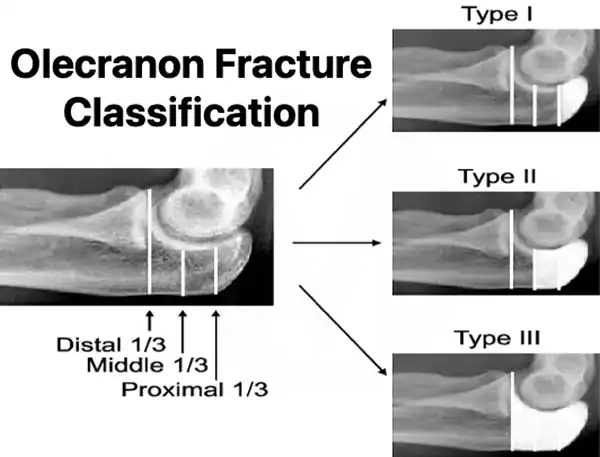
- Olecranon Fractures: These involve the bony tip of the elbow and are among the most common ulna injuries Dr. Kamineni treats. Because the triceps muscle attaches directly to the olecranon, displaced fractures typically require surgical fixation to restore the ability to straighten the arm and allow early movement during recovery.
- Monteggia Fractures: A break in the ulnar shaft combined with dislocation of the radial head, this is a more complex injury pattern that demands prompt, accurate diagnosis. The radial head dislocation is easily missed on initial imaging, and delayed treatment significantly worsens outcomes.
- Nightstick Fractures: Isolated ulnar shaft fractures, often the result of a defensive blow to the forearm, may be managed non-surgically when the fracture is stable and minimally displaced. More complex patterns typically require plate and screw fixation.
Dr. Kamineni will review your imaging in detail — including CT scanning when indicated — and walk you through all available treatment options. His approach is always to match the treatment to the specific demands of your injury and your life.
Frequently Asked Questions
How long does it take to recover from a ulna fracture?
Recovery depends on the fracture type and the treatment approach. Non-displaced fractures managed with immobilization often heal within six to eight weeks. Surgical cases typically require three to six months before full strength and function are restored, with physical therapy playing an important role throughout. Dr. Kamineni will give you a personalized timeline so you know exactly what to expect at each stage.
Will I need surgery for my ulna fracture?
Not necessarily. Stable, minimally displaced fractures are often successfully managed with a cast or functional brace. However, displaced fractures, those involving the joint surface, and Monteggia-type injuries generally require surgery to restore alignment and joint stability. Dr. Kamineni will give you a clear recommendation based on a thorough review of your imaging and examination findings — never more intervention than necessary, and never less than your injury requires.
How do I find an ulna fracture specialist near me?
Dr. Kamineni sees patients at his offices in Mount Carmel and Olney, Illinois, with convenient online appointment requests available through this website. Whether your injury is recent or you are managing complications from a prior fracture, our team is ready to help. We look forward to seeing you.