Understanding Valgus Extension Overload Syndrome
Valgus Extension Overload Syndrome
Valgus extension overload syndrome is a condition that commonly affects athletes who perform repetitive overhead throwing motions, particularly baseball pitchers and other throwing athletes. It occurs when repeated stress across the elbow joint causes irritation and damage to the structures on the back and inner side of the elbow.
During the throwing motion, significant forces travel through the elbow. The inner side of the joint experiences a valgus force, while the back of the elbow experiences compression as the arm rapidly straightens. Over time, these repeated stresses can lead to inflammation, cartilage damage, and the development of bone spurs in the back of the elbow.
Recognizing the symptoms of valgus extension overload syndrome early can help athletes receive proper treatment and prevent more serious elbow injuries.

Overuse Injury of the Throwing Elbow
How Valgus Extension Overload Syndrome Develops
Valgus extension overload syndrome develops when repetitive throwing motions place excessive stress on the elbow joint. During the late phase of the throwing motion, the elbow rapidly extends while a valgus force pushes the joint inward. This combination of forces compresses the back of the elbow joint while simultaneously stretching structures on the inner side.
Over time, this repetitive stress can cause irritation of the cartilage and soft tissues at the back of the elbow. Small bone spurs may form on the olecranon, the bony tip of the elbow, as the body attempts to adapt to repeated compression. These bone spurs can lead to pain, catching, and limited motion when the elbow straightens.
Although this condition is most often seen in throwing athletes, any activity that places repetitive stress on the elbow during extension can contribute to similar symptoms.
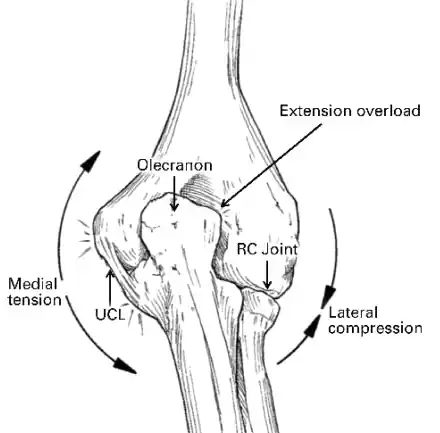
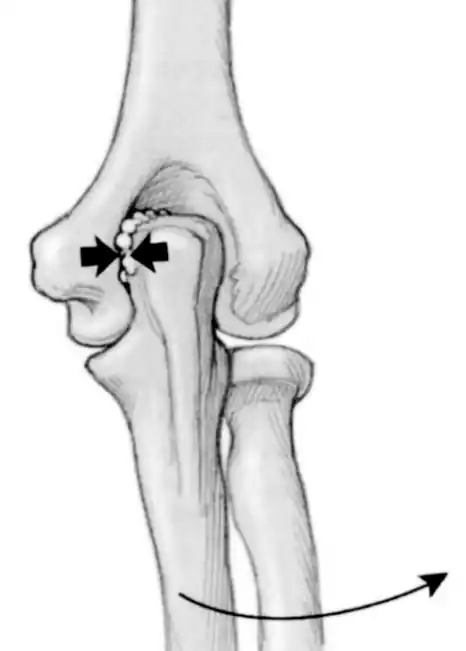
Athletes at Risk: How Valgus Extension Overload Happens
The following images illustrate the movements of world-class athletes that can lead to valgus extension overload syndrome without preventive measures.



Frequently Asked Questions
What symptoms are common with valgus extension overload syndrome?
Common symptoms include pain at the back or inner side of the elbow, swelling, decreased throwing performance, and discomfort when fully straightening the arm. Some individuals may also experience catching, locking, or clicking within the joint due to bone spurs or irritated tissue.
Who is most likely to develop this condition?
Valgus extension overload syndrome most frequently affects athletes who perform repetitive overhead throwing motions, such as baseball pitchers, quarterbacks, javelin throwers, and tennis players.
How is valgus extension overload syndrome diagnosed?
Diagnosis typically begins with a physical examination and imaging such as X-rays or MRI scans.
What treatments are available?
Treatment often begins with rest, therapy, and strengthening. Surgery may be considered in severe cases.
Clinical Reference
The following paper provides additional clinical context on olecranon resection relevant to valgus extension overload syndrome.