Mountain Pose (Tadasana)
Benefits: Strengthens knees, thighs, calves, ankles, abs, and glutes
"Mountain pose is the mother of all poses. The alignment of mountain pose is contained within every yoga posture."
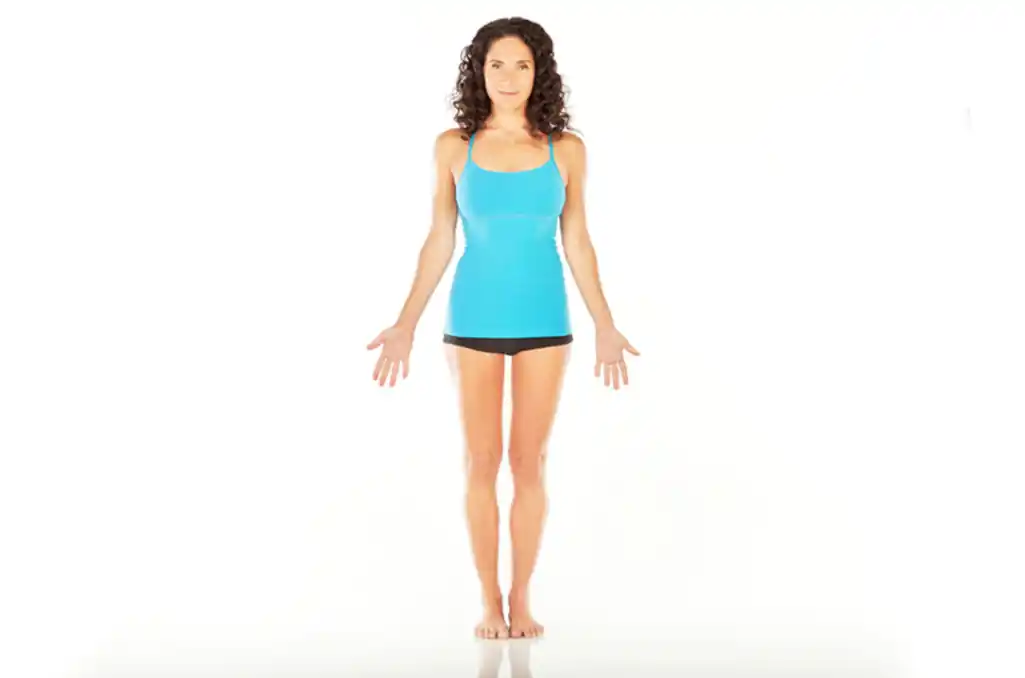
How to Perform Mountain Pose
- Stand with your feet together and heels slightly apart. Ground down through your feet.
- Spread your toes and cover as much territory as you can with your feet.
- Firm your thighs and drop your tailbone down towards your heels.
- Roll your shoulders back and down. Find extension through the crown of your head, as you simultaneously push down through your feet.
- Hold for 30 seconds or 5 deep breaths.
Frequently Asked Questions
What are the benefits of Mountain Pose?
Mountain pose strengthens the knees, thighs, calves, ankles, abdominals, and glutes. It also improves posture, balance, and body awareness. Because its alignment principles carry through into every other yoga posture, it is considered a foundational pose for all levels of practice.
Is Mountain Pose suitable for beginners?
Yes. Mountain pose is one of the most accessible yoga postures and is suitable for all levels, including complete beginners. Despite looking simple, it requires focus and body awareness to perform correctly, making it a valuable practice for anyone at any stage.
How long should I hold Mountain Pose?
A good starting point is to hold the pose for 30 seconds or 5 deep breaths. As your practice develops and your awareness of the posture improves, you can gradually increase the duration.
Why is it important to spread your toes in Mountain Pose?
Spreading your toes and grounding through the full surface of your feet creates a stable foundation for the pose. This helps distribute your weight evenly, activates the muscles of the feet and lower legs, and sets up correct alignment throughout the rest of the body.
Can Mountain Pose help with posture?
Yes. Mountain pose trains the body to stack the joints correctly — feet grounded, thighs engaged, tailbone dropping, shoulders rolled back and down, and the crown of the head lifting. Practising this alignment regularly can translate into improved posture in everyday standing and movement.