Triangular Interval Syndrome
Overview
Triangular Interval Syndrome is a condition in which the radial nerve becomes entrapped within the triangular interval, resulting in upper extremity radicular pain. Because the radial nerve and profunda brachii artery pass through this space on their way to the posterior compartment of the arm, they are vulnerable to irritation or compression.
This condition may contribute to pain, nerve symptoms, and functional limitations involving the shoulder, arm, and hand.
Anatomy of the Triangular Interval
The triangular interval, also referred to as the lower triangular space or triceps hiatus, is an anatomic space that connects the axilla to the posterior compartment of the arm.
Borders include:
- Superior: Teres major
- Medial: Long head of the triceps brachii
- Lateral: Lateral border of the humerus or lateral head of the triceps
The radial nerve and profunda brachii artery pass through this space.
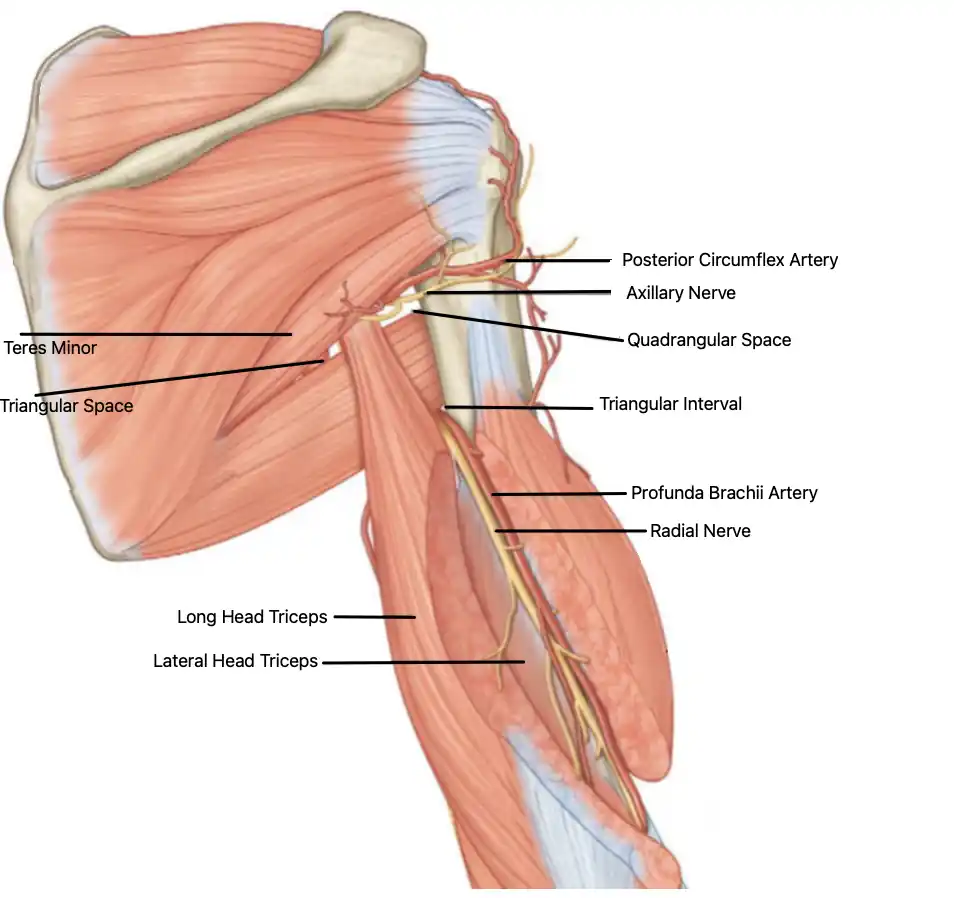
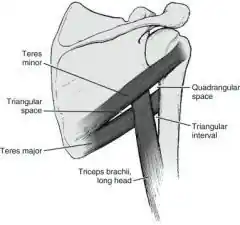
Shoulder Spaces Anatomy
This illustration demonstrates the surrounding spaces of the shoulder, including the triangular interval and adjacent structures.
Symptoms of Triangular Interval Syndrome
The hallmark symptom is upper extremity radicular pain caused by radial nerve compression.
- Pain radiating through the arm
- Shoulder or upper arm discomfort
- Sensory changes in the thumb, hand, and fingers
- Weakness in muscles supplied by the radial nerve
Causes
- Teres major and triceps hypertrophy
- Fibrous bands between these muscles
- Stiff shoulder leading to secondary muscle enlargement
Treatment
- Physical therapy
- Activity modification
- NSAIDs
- Surgical decompression (if needed)
Frequently Asked Questions
What is the triangular interval?
It is a space connecting the axilla to the posterior arm compartment and should not be confused with the medial triangular space.
Why is it clinically important?
It can compress the radial nerve, causing upper extremity radicular pain.
What muscles does the radial nerve control?
Triceps brachii, anconeus, and brachioradialis.
What exercises help?
Gentle radial nerve stretches may help, but only after proper evaluation. Avoid early stretching after injury.