Understanding Biceps Tendinitis
Biceps tendinitis is a common condition that causes pain in the front of the shoulder, resulting from irritation and inflammation of a biceps tendon. Tendons are the strong, flexible cords that attach muscles to bones. While the term "tendinitis" specifically implies inflammation, this condition often involves long-term wear and tear that can weaken the tendon over time. It can make simple movements like reaching overhead or lifting an object feel painful and difficult.
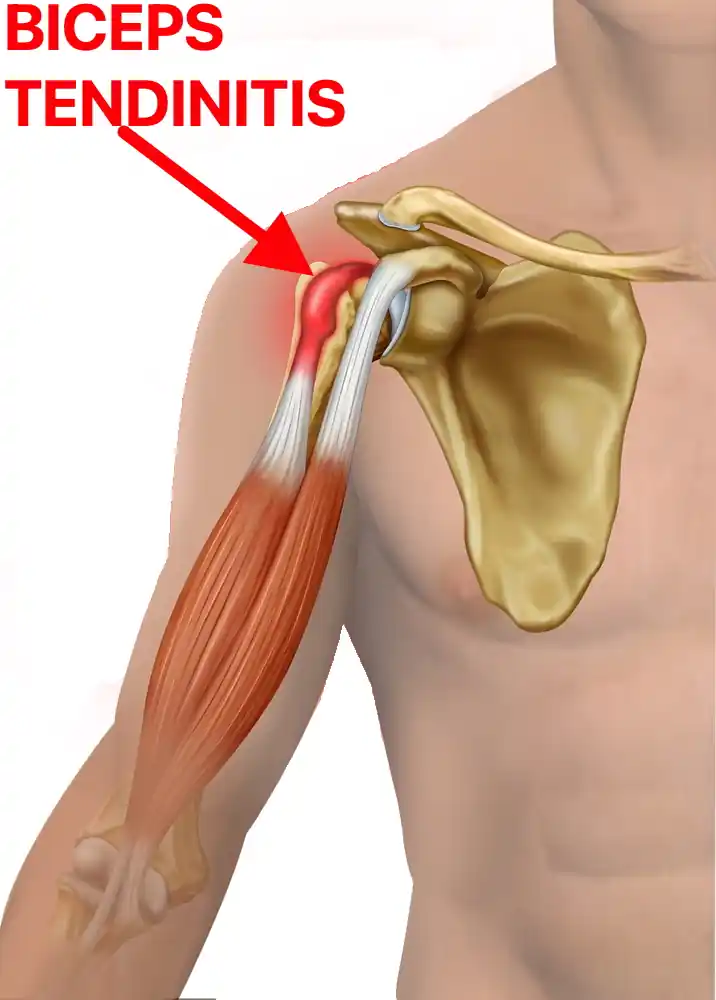
This condition most often affects the long head of the biceps tendon, which attaches deep inside the shoulder joint. It's frequently seen in adults who perform repetitive overhead activities, but it can affect anyone. Biceps tendinitis often doesn't happen in isolation; it can be linked to other shoulder problems, such as rotator cuff injuries or arthritis.
This article will provide a clear, patient-friendly overview of biceps tendinitis. We'll explore the anatomy of the biceps tendon, what causes it to become painful, the common symptoms to watch for, and how doctors diagnose the condition, along with its potential complications.

The Biceps Tendon and Shoulder Anatomy
To understand biceps tendinitis, it helps to know a little about the biceps muscle and its attachments. The biceps is the large muscle on the front of your upper arm that bulges when you flex. It has two "heads," each with its own tendon connecting it to the shoulder.
- Long Head of the Biceps Tendon: This is the tendon most often affected by tendinitis. It’s a long, cord-like structure that travels up the front of the arm, runs through a groove in the upper arm bone (the bicipital groove), and attaches to the top of the shoulder socket. Because it passes through the shoulder joint, it is vulnerable to friction, pinching, and stress during arm movements.
- Short Head of the Biceps Tendon: This tendon attaches to a different bony point on the shoulder blade, outside of the main joint. It is rarely a source of tendinitis because it is not subject to the same mechanical stress.
The biceps muscle also has a single tendon at the elbow, called the distal biceps tendon, which can also become inflamed, though this is much less common. When people talk about biceps tendinitis, they are almost always referring to the long head tendon at the shoulder.
The primary jobs of the biceps muscle are to bend the elbow and to rotate the forearm (turning the palm upward). It also assists in lifting the arm forward. When the long head of the biceps tendon is inflamed, any of these movements can trigger pain at the front of the shoulder. The inflammation causes the tendon to swell, and this swollen tendon can rub against the sides of its narrow groove, creating a painful cycle of friction and further irritation.

What Causes Biceps Tendinitis?
Biceps tendinitis is primarily an overuse injury that develops from repetitive strain, but it can also stem from a sudden injury or be related to other shoulder problems.
Wear and Tear Over Time
For many people, biceps tendinitis is the result of gradual wear and tear that comes with age. As we get older, our tendons naturally lose some of their elasticity and ability to heal from minor daily stresses. Over many years, this accumulated micro-damage can lead to chronic inflammation and degeneration of the tendon, a process sometimes called tendinosis.
Repetitive Overuse
This is one of the most common causes. Activities that involve repeated overhead motions can overload the biceps tendon. If the tendon doesn't get enough time to rest and repair, it becomes inflamed. This includes:
- Sports: Activities like swimming, baseball (especially pitching), tennis, and volleyball put immense strain on the shoulder and biceps tendon. Weightlifting, particularly heavy curls or overhead presses, can also be a culprit.
- Work and Chores: Jobs that require frequent overhead lifting or reaching, such as painting, carpentry, or stocking high shelves, can lead to overuse tendinitis.
Sudden Injury
Occasionally, the condition can be triggered by a single, acute event. A sudden, forceful pull on the arm, like trying to catch a heavy falling object, or an awkward, jerking motion can directly injure the tendon and initiate an inflammatory response.
Association with Other Shoulder Conditions
Biceps tendinitis often doesn't occur on its own. It is frequently a "secondary" problem, caused or aggravated by another issue within the shoulder. The shoulder is a complex system, and when one part isn't working correctly, it can put extra stress on the biceps tendon. Common related conditions include:
- Rotator Cuff Injuries: Tears or tendinitis in the rotator cuff can alter the shoulder's mechanics, forcing the biceps tendon to work harder to help stabilize the joint.
- Shoulder Impingement: This occurs when the space at the top of the shoulder is too narrow, causing the rotator cuff and biceps tendons to get pinched during overhead movements. This chronic pinching is a major cause of inflammation.
- Labral Tears (SLAP Lesions): The long head of the biceps tendon attaches directly to the top of the labrum (the cartilage rim of the socket). A tear in this part of the labrum, known as a SLAP tear, can destabilize the biceps anchor and lead to pain and inflammation in the tendon.
- Shoulder Arthritis: Bone spurs from arthritis can rub against the biceps tendon, causing irritation.
- Shoulder Instability: If the shoulder joint is loose and tends to slip, the biceps tendon can be abnormally stretched or may even slip out of its groove, causing inflammation.
Risk Factors for Biceps Tendinitis
While anyone can develop this condition, some factors increase your risk:
- Age: It's more common in middle-aged and older adults due to natural tendon wear.
- Overhead Activities: Participation in sports or jobs that involve repetitive overhead motions is a major risk factor.
- Poor Posture or Technique: Slouching or using improper form during sports or lifting can place abnormal stress on the shoulder.
- Smoking: Nicotine can impair blood flow to tendons, hindering their ability to heal from micro-damage and making them more susceptible to injury.
- Pre-existing Shoulder Problems: Anyone with a history of rotator cuff tears, arthritis, or instability is at higher risk.
Symptoms of Biceps Tendinitis
The symptoms of biceps tendinitis are usually centered around the front of the shoulder and can range from mild to severe.
- Pain in the Front of the Shoulder: This is the primary symptom. It's often described as a deep, throbbing ache located at the front of the shoulder, which can sometimes radiate down the upper arm.
- Pain That Worsens with Activity: The pain typically flares up with overhead lifting, reaching, or throwing.
- Tenderness to the Touch: The area over the bicipital groove at the front of the shoulder is often very tender when pressed.
- A Snapping or Clicking Sensation: Some people feel or hear a snap or click in their shoulder when they move their arm, which can be caused by the inflamed tendon moving irregularly in its groove.
- Pain with Specific Movements: Reaching behind your back, putting on a coat, or lifting an object with your palm up can be particularly painful.
- Weakness or Fatigue: Due to pain, the arm and shoulder may feel weak, especially during lifting or repetitive motions.
- Night Pain: In more severe cases, the pain may be present at rest and can be bad enough to disrupt sleep, especially if you roll onto the affected shoulder.
How Doctors Diagnose Biceps Tendinitis
Diagnosing biceps tendinitis usually involves a careful review of your medical history and a thorough physical examination. Imaging tests are sometimes used to confirm the diagnosis or rule out other injuries.
Medical History and Physical Exam
Your doctor will ask about your symptoms, activities, and any past injuries. During the physical exam, they will:
- Palpate the shoulder to check for tenderness directly over the biceps tendon.
- Assess your range of motion to see which movements cause pain.
- Test your strength to identify any weakness in the biceps or rotator cuff muscles.
- Perform special tests, such as Speed's test or Yergason's test, which are specific maneuvers designed to stress the biceps tendon and see if they reproduce your pain.
Often, a diagnosis can be made based on these findings alone.
Imaging Tests
If the diagnosis is unclear or if another injury is suspected, your doctor might order imaging:
- X-rays: These do not show tendons but are useful for checking for bone spurs, arthritis, or other bone-related issues that could be contributing to the pain.
- Ultrasound: This imaging technique uses sound waves to create a picture of the soft tissues. It can show if the tendon is thickened, inflamed, or has any tears.
- Magnetic Resonance Imaging (MRI): An MRI provides highly detailed images of both bone and soft tissue. It is the best tool for evaluating the biceps tendon for inflammation or tears and is also excellent for identifying associated problems like rotator cuff tears or labral injuries.
Potential Complications: What Happens if it's Ignored?
If biceps tendinitis is left untreated and the aggravating activities continue, the tendon can become progressively more damaged. The most significant complication is a biceps tendon tear.
- Partial Tears: Chronic inflammation can cause the tendon to fray, leading to a partial tear. This means some, but not all, of the tendon fibers are ruptured. This often results in increased pain and weakness.
- Complete Rupture: In some cases, a weakened tendon can tear completely. This often happens with a sudden, forceful movement. People usually feel a sharp pain and an audible "pop" in the shoulder. Interestingly, the chronic aching from the tendinitis often goes away after a rupture because the tension on the inflamed tendon is released.
A complete rupture of the long head of the biceps causes the muscle belly to retract downward, creating a bulge in the upper arm known as a "Popeye" deformity. While this can look alarming, many people, especially older individuals, can still function reasonably well because the short head of the biceps remains attached. However, there will be some loss of strength, particularly in twisting the forearm.
Ignoring persistent shoulder pain increases the risk of these complications. It is always better to address tendinitis early to prevent further damage.
Conclusion
Biceps tendinitis is a common source of front-of-shoulder pain that can limit your ability to work, play sports, and perform everyday tasks. It is most often an overuse injury caused by repetitive strain, but it is frequently associated with other shoulder conditions. The symptoms typically include a deep ache at the front of the shoulder, pain with overhead movements, and tenderness over the tendon.
If you are experiencing persistent shoulder pain, it is important to seek an evaluation from a healthcare professional. An accurate diagnosis is the first step toward effective management. The good news is that most cases of biceps tendinitis can be managed successfully, allowing individuals to return to their activities without pain.
By understanding the condition, listening to your body, and taking steps to protect your shoulders through proper technique, strengthening, and rest, you can overcome biceps tendinitis and prevent it from returning. You don't have to "just live with" the pain; with the right care, you can get your shoulder back on track.
Frequently Asked Questions
What's the difference between biceps tendinitis and tendinosis?
"Tendinitis" implies active inflammation of the tendon. "Tendinosis" refers to a more chronic condition where the tendon has undergone degenerative changes (like fraying and breakdown of collagen) from long-term wear and tear, often with little active inflammation. In reality, many patients have a mix of both.
Can biceps tendinitis go away on its own?
If the condition is very mild and caused by a specific overuse activity, it may improve on its own with enough rest and by avoiding that activity. However, if the pain is persistent or is caused by an underlying mechanical issue in the shoulder (like impingement), it is unlikely to fully resolve without some form of management, such as physical therapy.
I have pain in the front of my shoulder. How do I know it's not a rotator cuff problem?
It can be difficult to tell on your own, as the symptoms can overlap, and the two conditions often occur together. Pain located specifically at the front of the shoulder that is tender to the touch is classic for biceps tendinitis. A rotator cuff tear often causes pain more on the side of the shoulder and is more likely to be associated with significant weakness when lifting the arm out to the side. A thorough examination by a doctor is the best way to distinguish between them.
I heard a "pop" in my shoulder and now I have a bulge in my arm. What happened?
A sudden "pop" followed by the appearance of a bulge in the upper arm (a "Popeye" muscle) is a classic sign of a complete rupture of the long head of the biceps tendon. You should see a doctor for an evaluation if this happens.
Is it safe to exercise with biceps tendinitis?
You should avoid activities that cause pain, especially repetitive overhead lifting. However, specific, gentle exercises prescribed by a physical therapist can be very helpful for recovery. A therapist can teach you how to strengthen the supporting muscles of the shoulder without aggravating the inflamed tendon.
Does having biceps tendinitis mean I will eventually tear the tendon?
Not necessarily. Many people successfully manage their tendinitis and never experience a tear. However, chronic, untreated tendinitis does weaken the tendon and increases the risk of a future rupture. Addressing the condition early is the best way to prevent this complication.