Understanding the Complete Rotator Cuff Tear
A complete rotator cuff tear is a full-thickness tear of a tendon in the shoulder's rotator cuff. In simpler terms, it means that one of the tendons responsible for shoulder movement has torn completely, detaching from the bone. This type of injury can lead to significant shoulder pain, weakness, and difficulty with everyday activities. Rotator cuff problems are quite common; in fact, millions of people visit their doctors each year for related issues. A complete tear is a more severe form of rotator cuff injury compared to a partial tear, and understanding what it means is the first step toward managing it.
This article will explain the role of the rotator cuff in your shoulder, how complete tears occur, the common symptoms to look for, and how doctors diagnose the condition. We will also explore what might happen if the tear is not addressed. The information is designed to be easy to understand, helping you or your loved ones get a clearer picture of a complete rotator cuff tear.
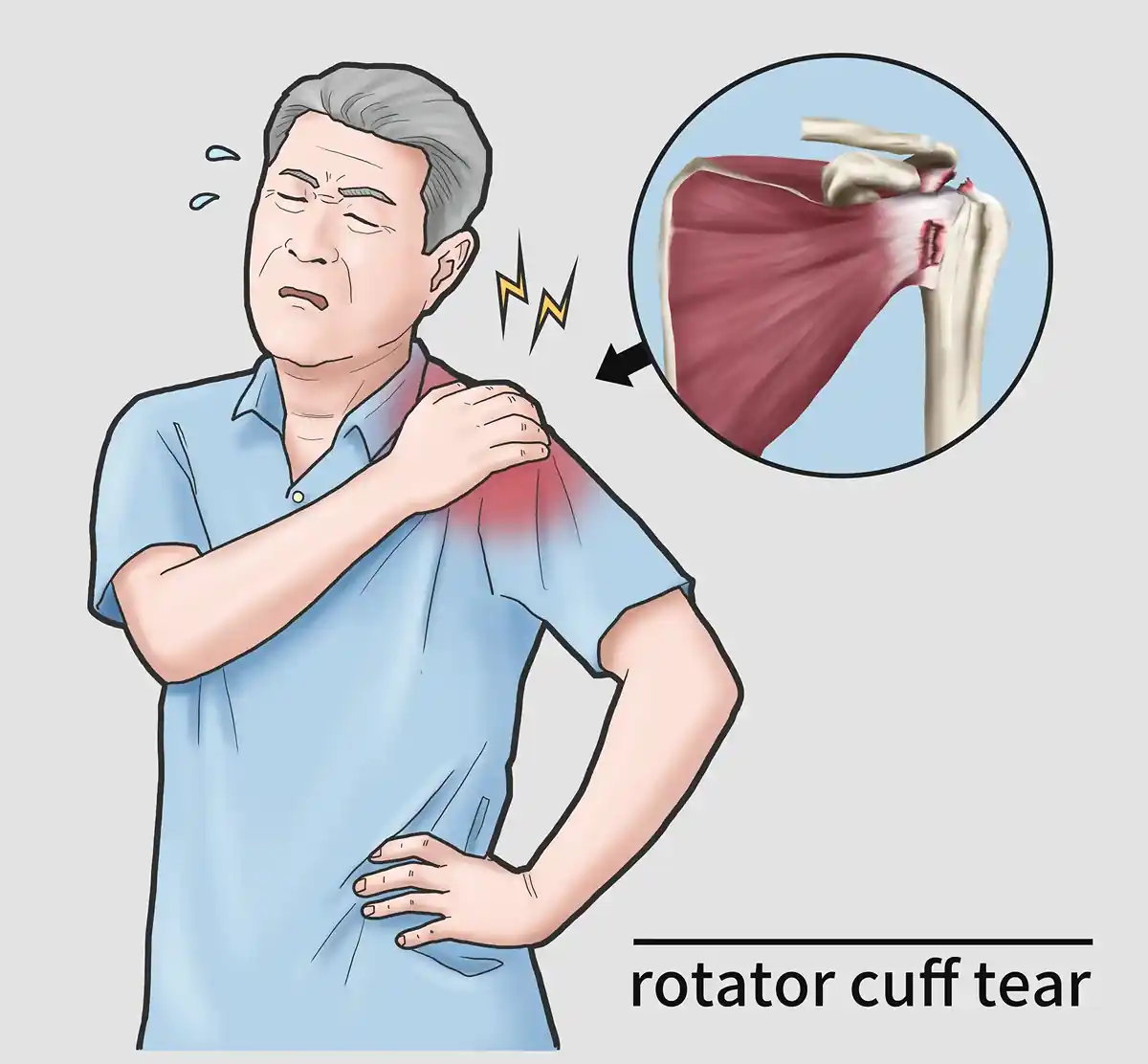
The Shoulder and the Rotator Cuff
To grasp what a rotator cuff tear is, it helps to first understand the shoulder's structure. The shoulder is a ball-and-socket joint composed of three bones: the upper arm bone (humerus), the shoulder blade (scapula), and the collarbone (clavicle). The head of the humerus, which is the "ball," fits into a shallow socket in the shoulder blade. Because this socket is not very deep, the shoulder relies heavily on the surrounding soft tissues for its stability and movement.
The rotator cuff is a group of four muscles and their connecting tendons that surround the shoulder joint. These muscles—the supraspinatus, infraspinatus, subscapularis, and teres minor—work as a team to keep your shoulder stable and allow you to move your arm. The tendons of these muscles form a "cuff" or covering around the head of the humerus, attaching it firmly to the shoulder blade. Essentially, the rotator cuff's job is to hold the ball in the socket and help you lift and rotate your arm. You use your rotator cuff for actions like reaching overhead, throwing a ball, or scratching your back. A healthy rotator cuff ensures smooth, controlled motion.
Above the rotator cuff tendons, there is a small, lubricating sac called a bursa. The bursa helps the tendons glide smoothly under the bony top of the shoulder (the acromion) when you move your arm. If the rotator cuff is injured or irritated, this bursa can also become inflamed, contributing to shoulder pain.
What Is a Complete Rotator Cuff Tear?
A rotator cuff tear happens when one of the tendons tears away from its attachment point on the humerus. While any of the four tendons can tear, the supraspinatus tendon, which runs along the top of the shoulder, is the most frequently affected. In many cases, a tear starts as fraying or a partial tear, much like a rope that has begun to unravel. If the damage progresses, the tendon can tear completely. This can happen suddenly, such as during a fall or when lifting something heavy.
It's helpful to distinguish between a partial and a complete tear. A partial tear means the tendon is damaged but not entirely severed. Some of its fibers are torn, but a portion of the tendon remains attached to the bone. Think of it as a rope that is frayed but not yet broken in two.
A complete tear, also known as a full-thickness tear, means the tendon has split all the way through or detached completely from the bone. This is like the rope snapping into two separate pieces. When this happens, a gap or hole can form in the tendon where it should be attached. The torn tendon may even retract, or pull back, from the bone. An important thing to know is that complete tears do not heal on their own; the body cannot simply reattach a tendon that has fully come off the bone without some form of intervention.
A complete rotator cuff tear is generally considered a more serious injury than a partial one. When the tendon is fully torn, the muscle it's connected to can no longer effectively pull on the arm bone. This leads to noticeable weakness and a loss of function in the shoulder. For instance, people with a complete tear often struggle to lift their arm or keep it held up because the muscle's force is no longer being transmitted to the arm.
Complete tears can also vary in size. Doctors may classify them as small, medium, large, or massive, depending on the dimensions of the tear or how many tendons are involved. Larger or more complex tears tend to cause more severe symptoms and can be more challenging to manage. However, even a small complete tear can be quite painful and limiting.
How Common Are These Tears?
Rotator cuff tears become increasingly common with age. They are one of the most frequent reasons people seek medical care for shoulder pain. Studies show that over 20% of people over the age of 60 may have a full-thickness rotator cuff tear, and by age 80, this figure rises to more than half. Many of these are degenerative tears that develop gradually over time.
It's also important to realize that not every rotator cuff tear causes symptoms. Many people have a tear without knowing it because it doesn't produce pain or disability. These are known as asymptomatic tears and are often discovered by chance on an MRI performed for another reason. Even without pain, however, a tear can still cause underlying weakness or functional limitations. There is also a risk that a small, painless tear could worsen over time and eventually become symptomatic.
Given their prevalence, it’s not surprising that rotator cuff problems account for a large number of doctor visits annually. Individuals over 40 are at a higher risk due to natural wear-and-tear, but younger people can also experience tears, usually from injuries or overuse.
Causes of a Complete Rotator Cuff Tear
Rotator cuff tears typically happen in one of two main ways: from a sudden injury or from gradual wear and tear over a long period. Sometimes, it's a combination of both—a tendon weakened by long-term wear that finally gives way during a minor incident.
Acute Injury (Traumatic Tear)
An acute tear happens suddenly, usually due to a specific event. Falling on an outstretched arm, lifting a very heavy object with a jerking motion, or a direct blow to the shoulder can cause a tendon to tear abruptly. People often report feeling a "pop" or a tearing sensation at the moment of injury. This type of tear can occur during a sports accident, a fall from a ladder, or even while trying to catch a heavy object.
Acute tears often cause immediate, intense pain and sudden weakness in the arm. You might find you can no longer lift your arm. These tears can happen at any age, though a significant force is usually required in younger individuals. In older adults, even a minor fall can cause a tear if the tendons are already weakened.
Degenerative Wear-and-Tear (Chronic Tear)
Many rotator cuff tears develop slowly over time. A degenerative tear is the result of long-term stress and fraying of the tendon. As we age, our tendons naturally become weaker and less flexible. The blood supply to the rotator cuff tendons also decreases, which impairs the body's ability to repair small, daily damage. Over years, this process can set the stage for a tear.
Repetitive overhead movements are a major contributor to degenerative tears. Jobs and activities that involve a lot of overhead lifting, such as painting, carpentry, or construction work, can put chronic strain on the shoulder. Sports like baseball (especially pitching), tennis, and swimming also involve repetitive motions that can stress the tendons. Over time, this overuse can cause the tendon to wear thin and eventually tear.
Degenerative tears are more common in people over 40. Often, a person with this type of tear cannot recall a specific injury that caused it. The pain and weakness may have come on gradually. It's not uncommon for a person to notice something is wrong only when they experience weakness or difficulty with certain movements. By the time they seek medical help, the tear may already be complete. Conditions like chronic tendinitis or shoulder impingement (where the tendon gets pinched) can precede a degenerative tear, as years of inflammation can weaken the tendon until it gives way. Bone spurs on the underside of the acromion can also contribute by rubbing against the tendon and slowly causing it to fray.
Risk Factors for Rotator Cuff Tears
Several factors can increase your risk of developing a tear:
- Age: This is one of the biggest risk factors. The natural aging process leads to wear and tear on tendons.
- Repetitive Overhead Activities: Jobs or hobbies that involve frequent overhead motions increase the strain on your rotator cuff.
- Sports: Athletes in sports like baseball, tennis, swimming, and weightlifting are at higher risk.
- Dominant Arm: Tears are more common in your dominant arm, simply because it gets more use.
- Family History: There's evidence that a genetic predisposition to weaker tendons can run in families.
- Smoking: Smoking can impair blood flow, which hinders a tendon's ability to repair itself from minor damage.
- Poor Posture: Slouching or rounded shoulders can alter your shoulder mechanics and lead to tendon impingement.
Symptoms of a Complete Rotator Cuff Tear
A complete tear can cause a variety of symptoms, though they can differ depending on whether the tear was sudden or gradual.
Common symptoms include:
- Shoulder Pain: Often described as a dull, deep ache in the shoulder or upper arm. The pain can be present at rest and during activity.
- Night Pain: Many people find the pain is worse at night, especially when lying on the affected shoulder. Pain that disrupts sleep is a classic sign of a rotator cuff problem.
- Pain with Specific Movements: You might feel a sharp pain when lifting or lowering your arm, reaching overhead, or reaching behind your back. Activities like combing your hair or putting on a coat can become painful.
- Arm and Shoulder Weakness: A complete tear often causes significant weakness. You may have trouble lifting your arm or find it feels weak when rotating it. Some people report they simply "can't lift the arm like before."
- Shoulder Noises: Some people experience a crackling or grinding sensation (crepitus) when moving the shoulder.
If the tear was acute (from an injury), symptoms are usually immediate and dramatic. You would likely feel a sudden, severe pain, possibly with a popping or tearing sensation. This is followed by immediate weakness, making it difficult or impossible to lift the arm.
If the tear was chronic (degenerative), symptoms may start subtly. You might have had shoulder aches for months that came and went. Over time, the pain often becomes more constant, and the weakness more noticeable. Night pain and difficulty with routine tasks like dressing become more common.
When to See a Doctor
You should consider seeing a doctor if you have persistent shoulder pain or difficulty using your arm that doesn't improve with a few days of rest. It is especially important to seek immediate medical evaluation if you suffer a shoulder injury followed by a sudden inability to lift your arm.
For more gradual symptoms, if shoulder pain and weakness are affecting your sleep or daily activities, it’s wise to get it checked out. Chronic shoulder pain is a sign that something needs to be addressed. Early evaluation may help prevent the problem from getting worse.
How Doctors Diagnose a Complete Tear
Diagnosing a rotator cuff tear typically involves a medical history, a physical exam, and imaging tests.
- Medical History: Your doctor will ask about your symptoms, when they started, whether there was an injury, and how it impacts your life.
- Physical Examination: The doctor will examine your shoulder, checking for muscle wasting, tenderness, and your range of motion. They will perform strength tests, asking you to push against resistance in different directions to identify weakness in specific rotator cuff muscles. These tests help pinpoint which tendon might be torn.
- X-Rays: While X-rays don't show tendons, they can reveal other issues like bone spurs, arthritis, or fractures that could be causing pain. In cases of long-standing tears, an X-ray might show subtle changes in the joint.
- Magnetic Resonance Imaging (MRI): An MRI is the gold standard for diagnosing rotator cuff tears. It provides detailed images of soft tissues, allowing the doctor to see the tear, measure its size, identify which tendon is involved, and assess the quality of the surrounding muscle.
- Ultrasound: Ultrasound can also be used to visualize the rotator cuff tendons. It is a dynamic test that can show the tendon in motion and is a good alternative if an MRI isn't possible.
Clinical Reference: Rotator Cuff Tears
The following document provides additional clinical information on rotator cuff tears for patients and providers.
What Happens if a Tear Is Left Untreated?
If a complete rotator cuff tear is not addressed, several long-term problems can develop:
- Enlargement of the Tear: A small tear can become larger over time with continued use of the shoulder, leading to more pain and weakness.
- Permanent Loss of Function: Because the tendon remains detached, you may experience a permanent loss of motion and strength. The shoulder may try to compensate with other muscles, but certain movements could remain weak or impossible.
- Muscle Atrophy and Tendon Retraction: Over time, the muscle connected to the torn tendon will begin to shrink and weaken from disuse. The body may replace this muscle tissue with fat. The torn end of the tendon can also pull further away from the bone, making a future repair more difficult.
- Shoulder Arthritis (Rotator Cuff Arthropathy): In the long term, a large, untreated tear can lead to a specific type of arthritis. Without the rotator cuff to hold the joint stable, the ball of the shoulder can ride up and rub against the acromion, wearing away the cartilage. This condition, called rotator cuff tear arthropathy, causes pain, grinding, and further loss of motion.
- Lifestyle Limitations: Chronic pain and weakness can severely impact your quality of life, affecting sleep, work, and hobbies.
Preventing Rotator Cuff Injuries
While not all tears are preventable, you can take steps to reduce your risk:
- Avoid Repetitive Strain: Take breaks during overhead activities and listen to your body's pain signals.
- Maintain Good Posture: Good posture helps keep the shoulder joint properly aligned, reducing the risk of tendon impingement.
- Strengthen Shoulder Muscles: Regular exercises to strengthen the rotator cuff and the muscles around your shoulder blade can help support the joint.
- Maintain Flexibility: Gentle stretching can keep your shoulder moving well and prevent stiffness.
- Warm Up Properly: Always warm up before sports or strenuous activity to prepare your muscles and tendons.
- Don't Smoke: Quitting smoking can improve blood flow to your tendons, aiding in their ability to heal and stay healthy.
Conclusion
A complete rotator cuff tear is a significant injury that can cause pain, weakness, and limitations in daily life. Understanding the condition, its causes, and its symptoms is the first step toward finding a solution. Because a complete tear will not heal on its own, it is important to consult a medical professional for an accurate diagnosis and guidance. While treatments are not discussed here, rest assured that effective options exist to help manage pain and restore function. By addressing the issue early, you can prevent potential long-term complications and improve your chances of a successful recovery, allowing you to get back to the activities you enjoy.
Frequently Asked Questions
Can a complete rotator cuff tear heal on its own?
No, a complete rotator cuff tear, where the tendon is fully detached from the bone, cannot heal on its own. The tendon ends are separated, and the body cannot naturally reattach them.
Is a complete rotator cuff tear always painful?
While most complete tears are painful, it is possible to have one with minimal or no pain, especially if it developed very slowly over time. However, even "painless" tears usually cause some degree of arm weakness or functional limitation.
What's the difference between a rotator cuff tear and tendinitis?
Tendinitis is inflammation or irritation of the tendon, often from overuse. The tendon is still intact. A tear involves a physical disruption of the tendon fibers. While both can cause pain, a complete tear typically also causes significant and measurable weakness, which is less common with simple tendinitis.
If I have a tear in one shoulder, am I at risk for one in the other?
Yes, especially if your tear is degenerative (from wear and tear). The factors that contributed to the tear in one shoulder, such as age and activity level, are also present in the other. Studies have shown that people with a degenerative tear in one shoulder have a higher likelihood of developing one in the opposite shoulder.
Does a "pop" in my shoulder mean I tore my rotator cuff?
A popping or snapping sensation at the time of an injury can be a sign of an acute rotator cuff tear. However, other shoulder injuries can also cause a pop. If you experience this along with sudden pain and weakness, you should seek medical attention promptly.
Can I still move my arm with a complete rotator cuff tear?
It depends on the size of the tear and which tendon is affected. With a smaller complete tear, you may still be able to move your arm, but certain movements will be weak and painful. With a large or massive tear, you might find it impossible to actively lift your arm, a condition sometimes called "pseudoparalysis."
How long can I wait to see a doctor if I think I have a tear?
If you have a sudden injury with severe pain and weakness, you should see a doctor as soon as possible. For chronic, gradually worsening symptoms, it's best not to wait too long. Delaying evaluation can lead to complications like muscle atrophy and tendon retraction, which can make the condition harder to manage later on.