Understanding Shoulder Labral Tears
The shoulder is a ball-and-socket joint where the arm bone (humerus) meets the shoulder blade. Holding this joint together is a combination of ligaments, muscles, and cartilage—including a specialized type of cartilage called the labrum. The labrum lines the rim of the shoulder socket, deepening it and helping keep the ball of the joint securely in place.
A labral tear occurs when this cartilage is damaged, either pulled away from the bone or torn within its own substance. Labral tears can range from minor fraying that causes no symptoms to significant tears that lead to shoulder instability, pain, and loss of function. Understanding what the labrum does, how it can be injured, and what treatment options are available is an important step toward recovery.

What Is the Labrum and What Does It Do?
The labrum is a type of cartilage found only around the rim of the shoulder socket. Unlike the smooth, white articular cartilage that covers the ends of bones and allows them to glide, the labrum is more fibrous and rigid. It serves two key functions:
- Deepening the Socket: The ball of the shoulder (the head of the humerus) is much larger than the shallow socket (the glenoid). Think of it like a beach ball resting on a dinner plate. The labrum acts as a bumper around the edge of the socket, effectively deepening it and helping to keep the ball in place. Without a healthy labrum, the ball may slide partially out of the socket (subluxation) or fully dislocate.
- Attachment Point for Other Structures: Key ligaments that stabilize the shoulder attach to the labrum at specific locations. The tendon of the biceps muscle also attaches partly to the top of the labrum. When the shoulder is injured, these attachments can pull the labrum away from the bone along with them.
Types of Labral Tears
Not all labral tears are the same. There are several distinct types, and it is important to understand which type you have, as treatment can differ significantly.
- Tear from Instability (Bankart Lesion): This is the most common type and occurs when the labrum is torn completely off the bone. It is typically associated with a shoulder dislocation or subluxation—sometimes the person doesn't even realize the shoulder slid out of the socket. Without the labrum reattached, the shoulder may remain unstable and prone to repeated dislocations.
- Degenerative Fraying: Over time, the edge of the labrum can fray and become rough. This is very common in people over 40 and rarely causes symptoms on its own. Occasionally, a large piece of torn labrum can get caught in the joint, causing clicking or catching sensations.
- SLAP Lesion (Superior Labrum Anterior to Posterior): This type involves the top (superior) portion of the labrum, where the biceps tendon attaches. The tear can extend both in front of (anterior) and behind (posterior) the biceps attachment. SLAP lesions can be caused by a fall onto an outstretched arm, repetitive overhead motions, or a sudden pulling force on the arm.
Recognizing the Symptoms of a Labral Tear
Symptoms of a labral tear vary depending on the type and severity of the injury. Common signs include:
- Shoulder Instability: A sensation that the shoulder is loose, may "give way," or is about to slip out of place. This is especially common with tears related to dislocation.
- Pain: Often felt deep in the shoulder. The pain may worsen with overhead activity, reaching behind the back, or throwing motions.
- Clicking, Popping, or Catching: Mechanical symptoms during shoulder movement can indicate a torn piece of labrum is getting caught in the joint.
- Decreased Range of Motion: Difficulty moving the arm fully in certain directions, particularly overhead.
- Weakness: Especially with lifting or overhead activities, sometimes related to involvement of the biceps tendon.
It is worth noting that labral fraying alone often produces no symptoms at all and may be discovered incidentally during imaging for another issue.
Diagnosis
Because the labrum sits deep inside the shoulder joint, it can be difficult to diagnose with a physical exam alone. Doctors use a combination of approaches:
- Medical History and Physical Exam: Your doctor will ask about your symptoms, any history of dislocation or injury, and will perform specific tests designed to stress the labrum. However, these tests are not always reliable on their own.
- MRI or CT-Arthrogram: An MRI scan or a CT-arthrogram (a CAT scan with dye injected into the joint) are the best non-surgical imaging tools available. Both are approximately 80–85% accurate for detecting tears related to instability, though they can miss smaller SLAP lesions.
- Arthroscopy: The most definitive way to diagnose a labral tear is with shoulder arthroscopy—a minimally invasive surgical procedure that allows the surgeon to directly visualize the inside of the joint. This is also the most common way to repair the tear at the same time.
Treatment Options
Treatment depends on the type of tear, its severity, and the patient's activity level and goals.
- No Treatment for Minor Fraying: If the labrum is only mildly frayed and not causing symptoms, treatment is typically not required.
- Trimming (Debridement): If a torn portion of labrum is causing mechanical symptoms like catching or clicking, the loose piece may be surgically trimmed and smoothed without reattaching it.
- Labral Reattachment: When the labrum has been torn off the bone—as in instability-related tears or SLAP lesions requiring repair—it must be surgically reattached. This is typically done arthroscopically using sutures or small anchors to fix the labrum back to the rim of the socket. In some cases of instability, an open surgical approach may be preferred.
- Physical Therapy: Whether as the primary treatment or as part of post-surgical rehabilitation, physical therapy plays an important role in restoring strength, range of motion, and stability to the shoulder.
Recovery
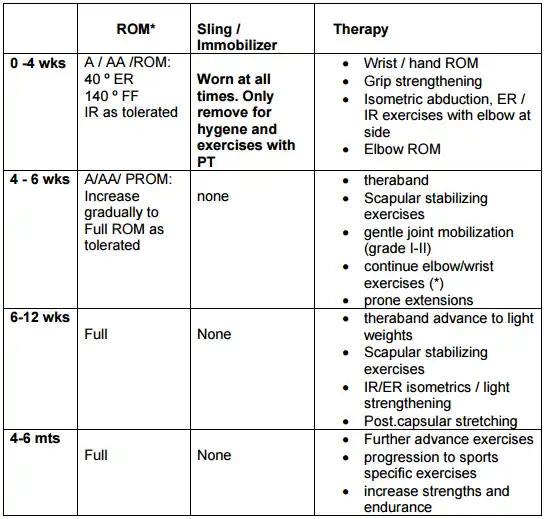
Recovery after labral surgery varies based on the location and severity of the tear and the type of repair performed. General guidelines include:
- Healing Time: It typically takes at least four to six weeks for the labrum to reattach to the bone, and another four to six weeks for the repair to gain strength. During this time, protecting the repair is critical.
- Gradual Progression: Motion and strengthening exercises are introduced gradually under the guidance of your surgeon and physical therapist to avoid stressing the repair before it has healed.
- Return to Sports: The timeline for returning to sports depends on the type of repair and the demands of the sport. Contact sports carry a higher risk of re-injury and may require a longer recovery. Most patients do achieve full shoulder function and are able to return to their previous level of activity.
The vast majority of patients who undergo labral repair experience a full return of shoulder function with no or minimal restrictions after complete recovery.
Frequently Asked Questions
What is the labrum?
The labrum is a fibrous type of cartilage that lines the rim of the shoulder socket. It deepens the socket to help keep the ball of the shoulder joint in place, and serves as an attachment point for important ligaments and the biceps tendon.
Can a labral tear heal on its own?
Minor fraying of the labrum often requires no treatment and causes no symptoms. However, significant tears—especially those where the labrum has been pulled off the bone—typically do not heal on their own and may require surgical repair to restore stability and function.
What is a SLAP tear?
SLAP stands for Superior Labrum Anterior to Posterior. It refers to a tear at the top of the shoulder socket where the biceps tendon attaches to the labrum. This injury can be caused by a fall, repetitive overhead activity, or a sudden traction force on the arm.
How is a labral tear diagnosed?
Diagnosis typically involves a physical examination, followed by imaging such as an MRI or CT-arthrogram. These tests are about 80–85% accurate. The most definitive diagnosis is made through shoulder arthroscopy, which allows direct visualization of the joint.
Do I need surgery for a labral tear?
Not always. Minor fraying without symptoms does not require surgery. However, tears causing instability, pain, or mechanical symptoms often benefit from surgical repair, particularly if conservative treatment has not provided relief.
How long is recovery after labral surgery?
It generally takes four to six weeks for the labrum to reattach to the bone and another four to six weeks to gain strength. Full recovery, including return to contact sports, can take several months. Your surgeon will guide your specific timeline based on the type of repair performed.
Will I be able to return to sports after a labral repair?
The vast majority of patients return to their previous level of sports and activity after labral repair. The timeline depends on the sport and the type of repair, with contact sports requiring a longer recovery to reduce the risk of re-injury.