Understanding Posterior Capsular Contracture of the Shoulder
Posterior capsular contracture is a condition where the back portion of the shoulder's joint capsule becomes unusually tight and loses its flexibility. This tightening, known as a "contracture," can lead to significant shoulder pain, stiffness, and a noticeable loss of motion. It is a recognized cause of shoulder problems, especially among athletes, but it can affect anyone.
Patients with this condition often have a specific and measurable limitation: difficulty rotating their arm inward. This can make simple tasks like reaching behind your back surprisingly difficult. Even though the tightness is at the back of the shoulder, it can cause pain that feels like it's at the front or top, often mimicking other common shoulder issues like impingement syndrome.
This guide will provide a clear, patient-friendly overview of posterior capsular contracture. We will explore the shoulder's anatomy, explain what happens when the posterior capsule tightens, review the common causes and symptoms, and describe how doctors diagnose this condition.
A Look Inside the Shoulder: The Joint Capsule
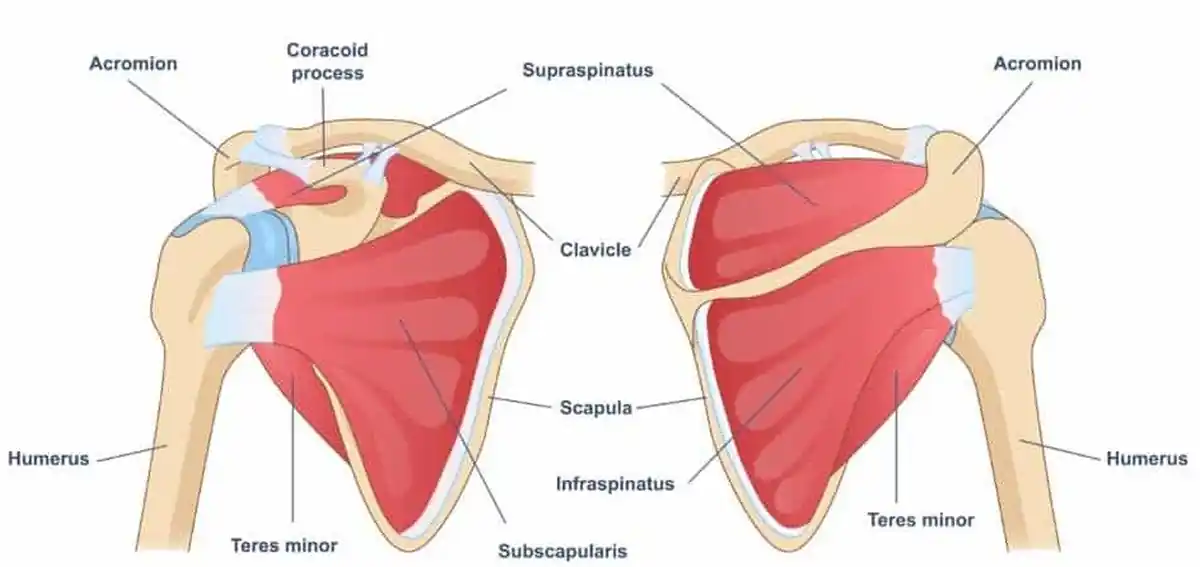
To understand posterior capsular contracture, it helps to first understand the shoulder's basic anatomy. The shoulder is a ball-and-socket joint, but unlike the deep hip socket, the shoulder's socket (the glenoid) is quite shallow. This design allows for an incredible range of motion but also makes the joint less stable. To compensate, the shoulder relies on a network of soft tissues for support.
A key player in this support system is the joint capsule. The capsule is a strong, fibrous "bag" or envelope of tissue that surrounds the entire shoulder joint. It attaches to the rim of the socket and the top of the upper arm bone (humerus), holding the joint together. Normally, the capsule is flexible and elastic, allowing the arm to move freely while providing stability.
The capsule has different regions: a front (anterior), a back (posterior), a top, and a bottom. The posterior capsule is the back wall of this tissue envelope. It is designed to stretch when you perform certain movements, such as rotating your arm inward or bringing it across your chest. When this specific part of the capsule loses its flexibility and becomes tight, it's called a posterior capsular contracture.
What is a Posterior Capsular Contracture?
A posterior capsular contracture occurs when the back part of the shoulder capsule thickens, shortens, and stiffens. It is not just temporary muscle tightness; it is a structural change in the connective tissue itself. This stiffened capsule acts like a short tether, physically preventing the shoulder from moving through its full range of motion.
The most noticeable effect is a loss of internal rotation. Patients often find they cannot twist their arm inward as far as they used to. This can manifest as:
- Difficulty reaching up behind the back (e.g., to fasten a bra or tuck in a shirt).
- Trouble reaching the hand to the opposite shoulder.
- Pain when bringing the arm across the front of the body.
Beyond just limiting motion, a tight posterior capsule fundamentally changes how the shoulder joint moves. In a healthy shoulder, the "ball" of the arm bone glides smoothly within the socket. When the back of the capsule is tight, it pushes the ball forward and upward during movements like lifting the arm. This abnormal shift can cause the bones to pinch the soft tissues—like the rotator cuff tendons and the bursa—at the front or top of the shoulder. This pinching can create pain that feels very similar to shoulder impingement, but the root cause is the tightness at the back of the joint.
It is important to distinguish posterior capsular contracture from a "frozen shoulder" (adhesive capsulitis). In frozen shoulder, the entire capsule becomes tight, leading to a severe, global loss of motion in all directions. In contrast, a posterior capsular contracture is more focused, primarily affecting internal rotation while often leaving other movements, like external rotation, relatively normal.
Common Causes and Risk Factors
A tight posterior capsule often develops gradually due to repetitive stress, micro-injury, and the body's healing response. Here are some of the most common causes:
Repetitive Overhead Sports
This is one of the most well-known causes, particularly in throwing athletes like baseball pitchers. The throwing motion places extreme demands on the shoulder.
- Adaptation: Over years of throwing, the front of the shoulder capsule can become stretched and loose. The body may respond by tightening the posterior capsule to provide stability, but this adaptation can become excessive.
- Deceleration: During the follow-through phase of a throw, the posterior shoulder structures absorb immense force to slow the arm down. This repeated stress can cause the posterior capsule to thicken and scar over time.
This leads to a condition in athletes known as Glenohumeral Internal Rotation Deficit (GIRD), which is a measurable loss of internal rotation and a direct sign of posterior capsule tightness.
Previous Shoulder Injury or Surgery
A contracture can develop after a traumatic event or an operation.
- Post-Traumatic Tightness: Even a minor injury like a shoulder strain or bruise can trigger an inflammatory response. If the shoulder isn't properly rehabilitated, the capsule can heal in a shortened, tightened state as scar tissue forms.
- Post-Operative Stiffness: After shoulder surgery, especially procedures requiring a period of immobilization in a sling, the capsule can stiffen. If the arm isn't moved through its full range during recovery, the unused portions of the capsule can contract. This is why physical therapy and early, gentle motion are so critical after surgery.
Chronic Poor Posture and Muscle Imbalances
Everyday habits can also contribute to this condition.
- Slouching Posture: Constantly sitting with rounded shoulders keeps the shoulder in a slightly internally rotated position. Over time, this can lead to adaptive shortening of the posterior structures.
- Muscle Imbalances: Over-training the chest and front shoulder muscles (e.g., with bench presses) without balancing it with stretching and strengthening of the back muscles can pull the shoulder forward, causing the posterior capsule to tighten in response.
Degenerative or Idiopathic Changes
Sometimes, a posterior capsular contracture develops without a clear cause. This may be related to age-related degeneration, where the capsule's tissues lose elasticity over time. It can also be a secondary effect of other shoulder conditions; for instance, if you have pain from rotator cuff tendinitis, you might avoid certain movements, leading the unused part of the capsule to tighten from disuse.
Signs and Symptoms
The symptoms of a posterior capsular contracture can range from mild to severe. The most common signs include:
- Restricted Internal Rotation: This is the hallmark symptom. You will have a noticeable and measurable difficulty reaching behind your back or twisting your arm inward.
- Shoulder Pain: Pain is common, often felt as a deep ache in the shoulder or a sharp pinching sensation with specific movements. The pain might be located at the back of the shoulder, or it may feel like impingement pain at the front or top of the shoulder when you lift your arm.
- Pain with Cross-Body Movements: Bringing your arm across your chest will likely be limited and painful at the end of the range.
- Difficulty Sleeping: Lying on the affected shoulder can be uncomfortable, and even lying on the other side can cause a painful stretch in the tight capsule.
- A Feeling of Tightness: Many patients report a distinct sensation that the shoulder is "stuck" or "tight," especially when trying to move into the restricted ranges.
- Decreased Athletic Performance: For athletes, this condition can lead to a drop in performance, such as reduced throwing velocity or a "dead arm" feeling after activity.
- Possible Clicking or Popping: The abnormal movement of the joint can sometimes cause a clicking or popping sensation, though this is not always present.
Importantly, a pure posterior capsular contracture does not typically cause significant muscle weakness. If you have major weakness, it may suggest an associated injury like a rotator cuff tear.
How Doctors Diagnose This Condition
Diagnosing a posterior capsular contracture relies heavily on a thorough physical examination and a detailed medical history.
Medical History
Your doctor will ask about your symptoms, your activities (especially sports or overhead work), and any previous injuries or surgeries. A history of being an overhead athlete or having a prior shoulder injury, combined with symptoms of stiffness, will raise suspicion.
Physical Examination
This is the most critical part of the diagnosis. Your doctor will carefully measure and compare the range of motion in both of your shoulders.
- Internal Rotation Test: A key test involves measuring your shoulder's internal rotation, often while you are lying on your back. A significant difference between your two arms is a classic sign.
- Cross-Body Adduction Test: The doctor will check how far you can bring your arm across your chest. Limitation and pain with this movement point toward a tight posterior capsule.
- Comparison to External Rotation: A crucial diagnostic clue is that external rotation (turning your arm outward) is usually normal or even increased. This helps distinguish a posterior contracture from a frozen shoulder, which limits motion in all directions.
- Impingement Tests: Your doctor may perform tests for impingement, like the Hawkins test. These tests may be painful, but the presence of limited internal rotation helps identify the contracture as the underlying cause of the impingement-like pain.
Imaging Tests
Imaging is often used to rule out other conditions or to identify associated injuries.
- X-rays: These are usually normal in a pure posterior contracture but are helpful for ruling out arthritis or bone spurs.
- MRI: An MRI provides a detailed view of the soft tissues. While it may not always clearly show the thickened capsule, it is very effective at identifying related injuries that often occur with a chronic contracture, such as a SLAP tear of the labrum or a rotator cuff tear.
Outlook and Management
The prognosis for posterior capsular contracture is generally very good. With proper management, most people can regain their motion, reduce their pain, and return to their normal activities.
The cornerstone of management is a dedicated physical therapy program focused on specific stretching exercises designed to lengthen the tight posterior capsule. Consistency with these stretches is key, as it can take weeks or months to see significant improvement. A therapist can also work on strengthening the surrounding muscles to create better balance and stability in the shoulder.
In the rare cases where a patient does not improve after several months of dedicated non-surgical care, a surgeon may consider a minimally invasive arthroscopic procedure to surgically "release" the tightened capsule.
It is important to address a posterior capsular contracture because ignoring it can lead to more serious injuries over time, such as rotator cuff tears or labral tears. By restoring normal mechanics to the shoulder, you not only relieve the current pain and stiffness but also protect the joint from future damage.
Frequently Asked Questions
Is posterior capsular contracture the same as a frozen shoulder?
No. While both involve a tight capsule, a frozen shoulder (adhesive capsulitis) is a global condition where the entire joint capsule is inflamed and contracted, leading to a severe loss of motion in all directions. A posterior capsular contracture is a more focused tightening of just the back part of the capsule, primarily limiting internal rotation and cross-body movements.
Can this condition be caused by just sitting at a desk all day?
While it's more common in athletes, chronic poor posture (like slouching over a desk) can contribute to it. A forward-hunch posture can lead to adaptive tightening of the posterior shoulder structures over a long period.
Will the tightness go away on its own if I just rest?
Unlike a simple muscle strain, a capsular contracture is a structural change in the connective tissue and is unlikely to resolve on its own with rest alone. In fact, a lack of movement could make it worse. The condition typically requires active, targeted stretching to regain flexibility.
I have pain in the front of my shoulder, so how can the problem be at the back?
This is a very common and important point. The tight posterior capsule forces the "ball" of the shoulder joint to shift forward and upward when you lift your arm. This abnormal movement can pinch the tendons and bursa at the front and top of the shoulder, causing pain that feels like classic impingement, even though the root cause is the tightness at the back.
What is GIRD, and how is it related to this?
GIRD stands for Glenohumeral Internal Rotation Deficit. It is a term commonly used in sports medicine to describe a measurable loss of internal rotation in the throwing shoulder of an overhead athlete. GIRD is a clinical sign of a tight posterior capsule and is a known risk factor for other shoulder injuries like SLAP tears and rotator cuff tears.
Is surgery common for this condition?
No, surgery is not common. The vast majority of patients with posterior capsular contracture respond well to a dedicated physical therapy and stretching program. Surgery is reserved for the small number of cases that do not improve after several months of conservative treatment.