Understanding Quadrangular Space Syndrome
Quadrangular Space Syndrome is a rare condition in which the neural and vascular structures that pass through the quadrangular space become compressed. Because this area carries important anatomy related to shoulder function, irritation or entrapment here can lead to pain, weakness, and abnormal sensations in the shoulder and upper arm.
This condition is often associated with overhead motion, repeated shoulder positioning, or structural narrowing of the space itself. While uncommon, it can be an important cause of persistent shoulder pain that may otherwise be mistaken for other nerve, muscle, or joint conditions.
This guide explains what the quadrangular space is, what passes through it, why compression happens, common symptoms, and how the condition is diagnosed and treated.
What is the Quadrangular Space?
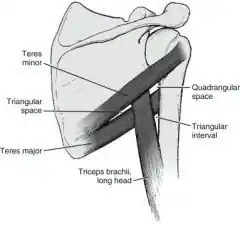
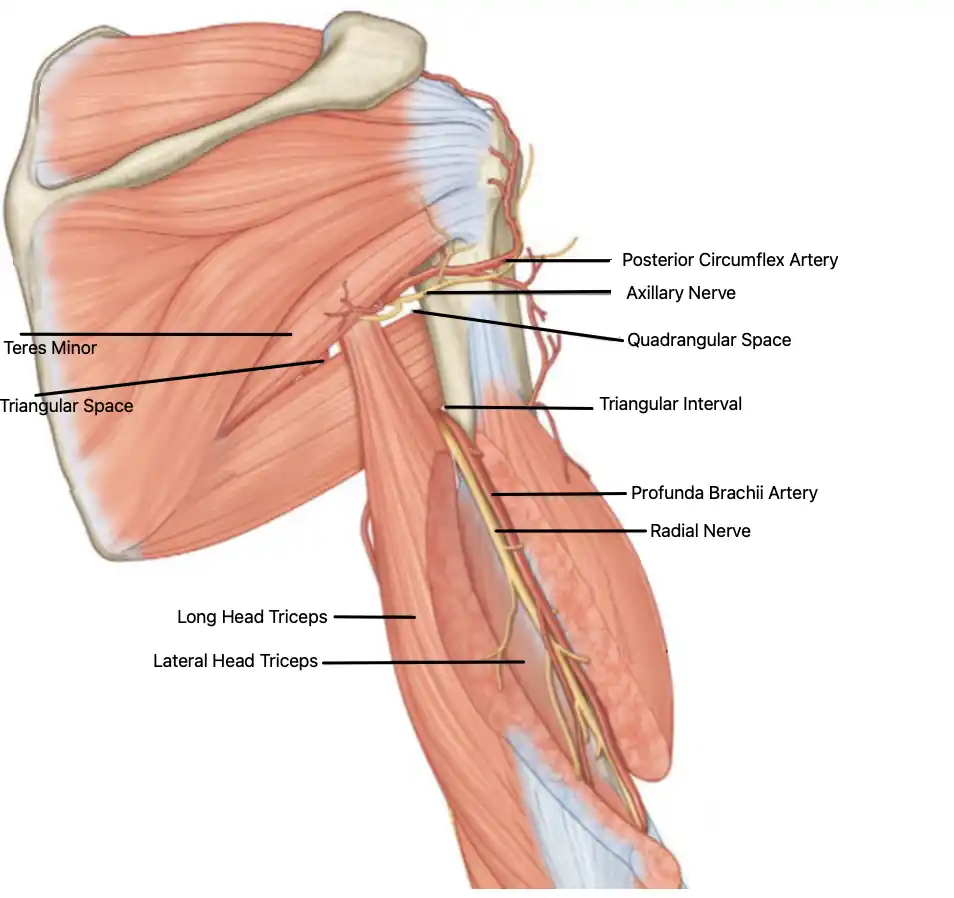
The quadrangular space, also called the quadrilateral space, is an intermuscular space located below the shoulder joint. It is defined by four borders and acts as an important passageway between the front and back of the shoulder region.
The borders of the quadrangular space include:
- Superiorly: Subscapularis anteriorly, teres minor posteriorly, and the shoulder joint capsule
- Inferiorly: Teres major
- Medially: Long head of the triceps
- Laterally: Surgical neck of the humerus
Because this space is relatively small, any decrease in its size or added pressure within it can affect the structures that pass through it.
What Passes Through the Quadrangular Space?
Two important structures pass through the quadrangular space:
- Axillary Nerve
The axillary nerve arises from the posterior cord of the brachial plexus and helps supply the deltoid and teres minor muscles. It also contributes sensation to the skin over part of the shoulder. - Posterior Circumflex Humeral Vessels
These vessels pass through the space and travel around the surgical neck of the humerus, contributing to blood supply around the shoulder.
When either the nerve or the vessels become compressed, symptoms of Quadrangular Space Syndrome can develop.
What Causes Quadrangular Space Syndrome?
Quadrangular Space Syndrome develops when something reduces the area of the quadrangular space and compresses the structures within it.
- Fibrous Bands: These may compress the contents of the space, especially during shoulder abduction and external rotation
- Scapular Fracture: Trauma can alter the nearby anatomy and create pressure in the space
- Benign or Malignant Mass: A growth in the region may crowd or compress the nerve and vessels
- Repetitive Shoulder Motion: Repeated overhead or rotational motion can worsen symptoms in susceptible patients
Because symptoms are often brought on by movement, this condition may be more noticeable in active individuals who frequently use the shoulder in demanding positions.
Symptoms of Quadrangular Space Syndrome
Symptoms may vary depending on the degree of compression and how long it has been present. Common symptoms include:
- Shoulder Pain: Pain is often felt in the shoulder region and may worsen with certain movements
- Tingling or Abnormal Sensation: Some patients experience tingling along the lateral side of the shoulder or arm
- Pain with Abduction and External Rotation: Symptoms are often increased when the arm is lifted and rotated outward
- Tenderness: There may be discomfort or altered sensation over the quadrangular space during examination
- Muscle Loss or Weakness: Longstanding compression may lead to neurotrophic loss or atrophy of the teres minor and deltoid muscles
Because these symptoms can overlap with other shoulder or nerve conditions, proper evaluation is important.
How is Quadrangular Space Syndrome Diagnosed?
Diagnosis typically involves a combination of clinical evaluation and imaging studies. A specialist may use several tools to identify the source of symptoms and rule out other causes.
- Plain Radiographs: X-rays may help detect fractures or masses that could be contributing to compression
- EMG Testing: Electromyography may be used to evaluate axillary nerve activity and help exclude other nerve-related causes of pain
- MRI or CT Scan: Advanced imaging can help detect muscle atrophy and evaluate the structures that pass through the space
- Diagnostic Injection: In some cases, a targeted lidocaine injection may be used; if pain improves and shoulder motion becomes easier, the result may support the diagnosis
Because Quadrangular Space Syndrome is uncommon, a thorough workup is often needed before confirming the diagnosis.
Treatment Options
Treatment usually begins with non-surgical care aimed at reducing irritation and improving shoulder function.
- Anti-inflammatory Medication: NSAIDs may be used to help reduce pain and inflammation
- Activity Modification: Avoiding aggravating motions may reduce compression and irritation
- Physical Therapy: Guided therapy may help restore motion, improve mechanics, and reduce stress on the affected area
If symptoms do not improve with conservative treatment over time, surgical treatment may be considered.
Frequently Asked Questions
Is Quadrangular Space Syndrome common?
No. It is considered a rare condition, which is one reason it can sometimes be overlooked during evaluation of ongoing shoulder pain.
What makes the pain worse?
Symptoms often increase during shoulder abduction and external rotation, especially with repeated overhead or athletic motion.
Can this condition cause weakness?
Yes. If the axillary nerve is compressed long enough, weakness or muscle loss in the deltoid or teres minor may develop.
How do doctors tell this apart from other shoulder conditions?
Doctors may use a physical exam, imaging, EMG testing, and sometimes a diagnostic injection to help distinguish it from other causes of shoulder pain or nerve irritation.
Will I need surgery?
Not always. Many patients begin with non-surgical treatment such as anti-inflammatory medication, activity modification, and physical therapy. Surgery may be considered if symptoms persist.
Can a mass or fracture cause this syndrome?
Yes. Structural problems such as a scapular fracture or a benign or malignant mass can reduce the size of the quadrangular space and contribute to compression.