Shoulder Arthritis
Overview
Shoulder arthritis occurs when the cartilage that cushions the bones of the shoulder joint begins to wear down over time. This can lead to pain, stiffness, and reduced range of motion, making everyday activities like lifting, reaching, or even sleeping uncomfortable.
The shoulder is made up of two joints: the glenohumeral joint (ball-and-socket) and the acromioclavicular (AC) joint. Arthritis can affect either or both of these joints, depending on the underlying cause.
Causes
Shoulder arthritis most commonly develops due to wear and tear over time (osteoarthritis). However, it can also be caused by:
- Previous shoulder injuries or fractures
- Rotator cuff tears (leading to cuff tear arthropathy)
- Inflammatory conditions such as rheumatoid arthritis
- Avascular necrosis (loss of blood supply to the bone)
- Repetitive overhead activities or heavy use of the shoulder
As the cartilage wears away, the bones may begin to rub against each other, leading to pain and inflammation.
Symptoms
- Persistent shoulder pain, especially with movement
- Stiffness and reduced range of motion
- Grinding, clicking, or catching sensations
- Swelling or tenderness around the joint
- Difficulty performing overhead or daily activities
- Pain that worsens at night or during rest
Symptoms often worsen gradually but can significantly impact quality of life if left untreated.
Diagnosis
A thorough physical examination and medical history are the first steps in diagnosing shoulder arthritis. Your physician will evaluate your range of motion, strength, and areas of tenderness.
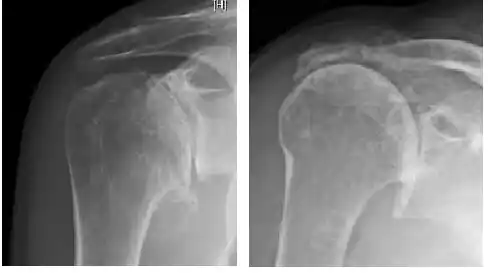
X-rays are typically used to confirm the diagnosis and may show joint space narrowing, bone spurs, or other degenerative changes. In some cases, MRI or CT imaging may be used to assess soft tissues and the extent of joint damage.
Treatment
Nonsurgical Treatment
Early stages of shoulder arthritis are often managed without surgery. Treatment options may include:
- Activity modification
- Physical therapy to improve mobility and strength
- Anti-inflammatory medications
- Corticosteroid injections for pain relief
Surgical Treatment
If nonsurgical treatments do not provide adequate relief, surgical options may be considered. These may include:
- Arthroscopic debridement
- Joint resurfacing procedures
- Total or reverse shoulder replacement
Surgical treatment is tailored to the severity of arthritis and the patient's activity level and goals.