Shoulder Arthritis Treatment
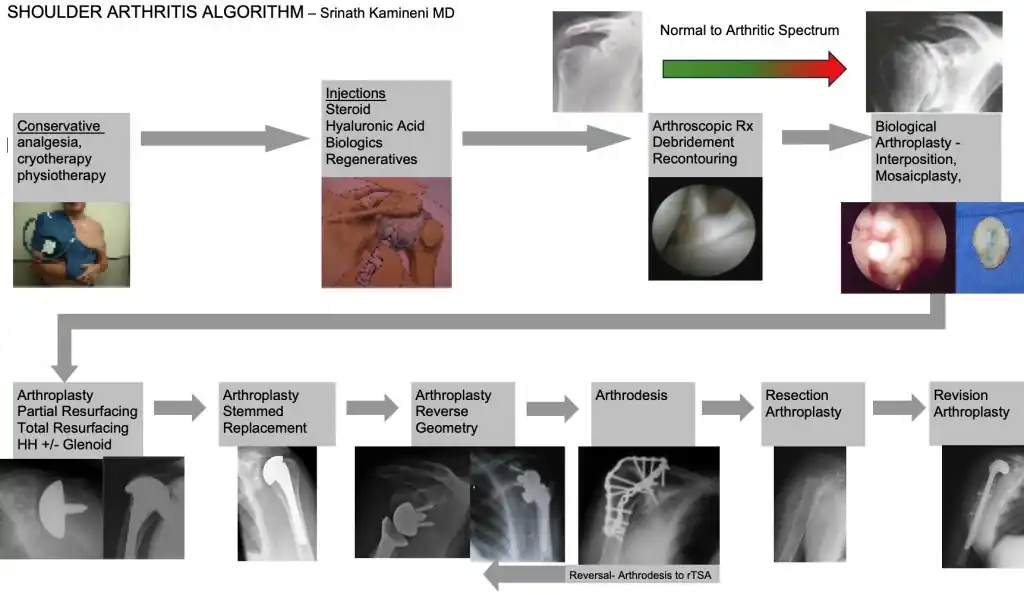
Shoulder arthritis can cause significant pain and limit your ability to perform everyday tasks. Whether your arthritis affects the glenohumeral joint (the main ball-and-socket joint) or the acromioclavicular joint (where the collarbone meets the shoulder blade), a range of treatment options are available — from conservative management through to surgery. The most appropriate approach depends on the severity of your arthritis, your age, and your level of dysfunction.
Non-Surgical Treatment
As with other arthritic conditions, initial treatment of arthritis of the shoulder is nonsurgical and may involve physical therapy. A number of approaches can help manage symptoms and improve function:
- Rest or Activity Modification: Avoid movements that provoke pain. You may need to modify the way you move your arm to perform daily tasks more comfortably.
- Physical Therapy: A structured physical therapy program can help maintain range of motion and strengthen the muscles that support the shoulder joint.
- Moist Heat: Applying moist heat to the shoulder can help relax muscles and ease stiffness.
- Anti-Inflammatory Medications: Nonsteroidal anti-inflammatory medications (NSAIDs), such as aspirin or ibuprofen, can help reduce inflammation and relieve pain.
- Ice Therapy: Icing the shoulder for 20 to 30 minutes two or three times a day can help reduce inflammation and ease pain.
- Corticosteroid Injections: If you have rheumatoid arthritis, your doctor may recommend a series of corticosteroid injections to help manage inflammation.
- Disease-Modifying Medications: For rheumatoid arthritis, your doctor may prescribe a disease-modifying medication such as methotrexate.
- Dietary Supplements: Some patients try supplements such as glucosamine and chondroitin sulfate. Please note: the U.S. Food and Drug Administration does not test dietary supplements. These compounds may cause negative interactions with other medications. Always consult your doctor before taking any dietary supplements.
Surgical Treatment
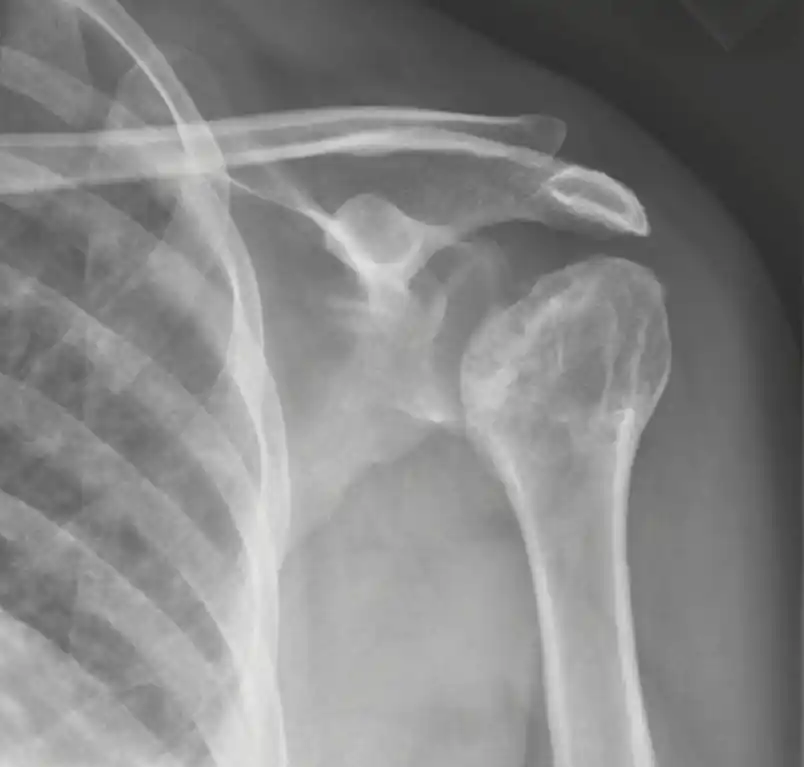
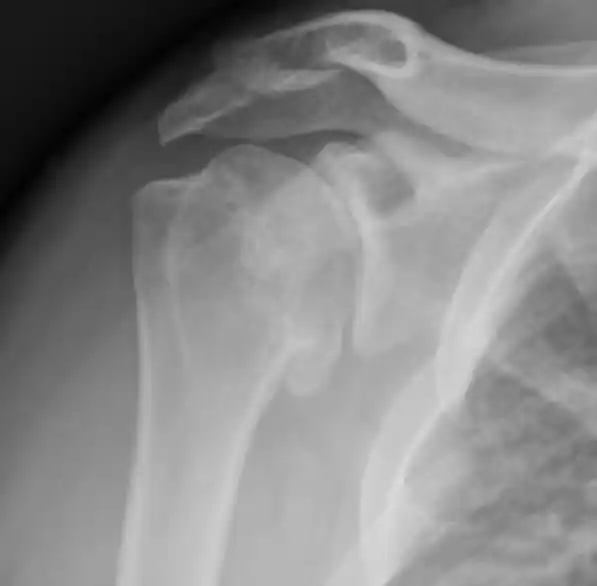
If nonsurgical treatments are no longer effective, surgical options are available depending on the individual's age, level of dysfunction, and degree of arthritis.
Arthritis of the glenohumeral joint can be treated by keyhole surgery (arthroscopy) or by replacing the entire shoulder joint with a prosthesis (total shoulder replacement), or by replacing only the head of the upper arm bone (humerus) in a procedure known as hemiarthroplasty.
The most common surgical procedure used to treat arthritis of the acromioclavicular joint is a resection arthroplasty. In this procedure, a small piece of bone from the end of the collarbone is removed, leaving a space that later fills with scar tissue. Surgical treatment of shoulder arthritis is generally very effective in reducing pain and restoring motion.

Potential Complications
As with all surgery, there is a risk of some complications. These are rare, but you should be aware of them before your operation. They include:
- Complications relating to the anaesthetic
- Infection
- Unwanted prolonged pain and/or stiffness
- Damage to the nerves or blood vessels around the shoulder
- Fracture
- Need to use a different type of prosthesis (stemmed or reversed)
- Prosthesis wear
- Loosening of the implant
- A need to redo the surgery
If you require further information, please discuss with the doctors either in clinic or on admission.
Clinical Reference
The following document provides additional clinical information on shoulder arthritis and replacement surgery.
Frequently Asked Questions
Can shoulder arthritis be treated without surgery?
Yes. Most cases of shoulder arthritis are initially managed with nonsurgical treatments including activity modification, physical therapy, anti-inflammatory medications, ice therapy, and injections. Many patients experience significant relief through these measures. Surgery is generally considered only when conservative treatments are no longer effective.
What is the difference between a total shoulder replacement and a hemiarthroplasty?
A total shoulder replacement replaces both the ball (humeral head) and the socket (glenoid) of the shoulder joint with prosthetic components. A hemiarthroplasty replaces only the ball portion of the joint, leaving the natural socket in place. The choice between the two depends on the extent of joint damage and the condition of the socket surface.
What is a resection arthroplasty of the acromioclavicular joint?
This is the most common surgical procedure for arthritis of the acromioclavicular (AC) joint. A small piece of bone is removed from the end of the collarbone, creating a space that gradually fills with scar tissue. This eliminates the painful bone-on-bone contact and is generally very effective at relieving AC joint pain.
How do I know if I need shoulder replacement surgery?
Surgery is typically considered when shoulder pain and dysfunction significantly impact your quality of life and conservative treatments such as physical therapy, medications, and injections are no longer providing adequate relief. A thorough evaluation by an orthopedic specialist will help determine the most appropriate option for your individual circumstances.
Are corticosteroid injections safe for shoulder arthritis?
Corticosteroid injections can provide effective short-term relief from pain and inflammation in the shoulder joint. They are generally safe when administered by a qualified clinician, though repeated injections over time may have limitations. Your doctor will advise on the most appropriate use of injections as part of your overall treatment plan.
What are the risks of shoulder replacement surgery?
Complications from shoulder replacement are uncommon but can include infection, nerve or blood vessel injury, fracture, implant loosening or wear, prolonged stiffness, and the need for revision surgery. Your surgeon will discuss all potential risks with you in detail before any procedure.